
UBiBot Logo
UBiBot Logo
  • UBiBot Logo
  • Home
  • Products

    NEW

  • Pricing
  • Support
  • About Us
  • Download
  • magnifying-glass  Search
  • magnifying-glass header-close
  • Sign in Sign in
    Public Web Console Public Web Console
    On-Premises App Center On-Premises App Center
  • Home
  • Products

    NEW

  • Pricing
  • Support
  • About us
  • Download
  •  Public Web Console
  •  On-Premises App Center
  • Where to Buy

Learn Hub

Explore Knowledge Academic Research In-depth Tech

Share

LinkedIn

Facebook

X (Twitter)

Newsletter Signup

Table of contents

    University of Cambridge Study Uses UbiBot WS1 for Glasshouse Environment Monitoring in Chlorella vulgaris Digestate Cultivation

    Research Overview

    Paper Title Vitamin B12 bioaccumulation in Chlorella vulgaris grown on food waste-derived anaerobic digestate
    Publisher Elsevier B.V.
    Journey Algal Research
    Publish Time Available online October 12, 2023; Algal Research 75, 2023, Article 103290
    Authors / Institutions Konstantinos P. Papadopoulos, Lorraine Archer, Ana Camila Zenteno Illanes, Ellen L. Harrison, Fiona Taylor, Matthew P. Davey, Daniela Ahuatzin Gallardo, Allan J. Komakech, Shahla Radmehr, Andre Holzer, Alison G. Smith, and Payam Mehrshahi from the University of Cambridge; Marcella Fernandes de Souza and Erik Meers from Ghent University
    UbiBot Product UbiBot WS1 sensor
    Data Collected Ambient temperature and ambient light / solar irradiance conditions inside the Algal Innovation Centre glasshouse
    Sampling Frequency The paper describes continuous monitoring and presents light data as hourly rolling averages, but it does not explicitly state the raw UbiBot logging interval
    Research Period Pilot-scale glasshouse cultivation included TAP medium cycles between August 31 and October 7, 2021, and one digestate cultivation cycle from October 7 to October 20, 2021. The main 150 L TAP-versus-digestate comparison used 13-day cultivation periods.
    Application Scenario Microalgae cultivation monitoring, anaerobic digestate valorisation, Chlorella vulgaris growth analysis, vitamin B12 bioaccumulation, glasshouse photobioreactor monitoring, aquaculture feed ingredient research
    Original Link https://doi.org/10.1016/j.algal.2023.103290

    Research Background: What Problem Did This Study Address?

    Anaerobic digestion is widely used to convert organic waste into biogas. Alongside biogas, the process generates liquid digestate, a nutrient-rich stream commonly applied to farmland as fertilizer. Digestate is usually valued for macronutrients such as nitrogen and phosphorus, but its bioactive micronutrients are less understood.

    This study explored whether digestate produced from fruit and vegetable waste could become enriched with vitamin B12 during anaerobic digestion, even though plants themselves contain negligible B12. The researchers then examined whether Chlorella vulgaris could grow on this digestate and bioaccumulate B12 into algal biomass.

    The question is important because microalgae are increasingly studied as food, feed, aquaculture, and bioremediation resources. If digestate can supply both nutrients and bioactive compounds, it may support production of higher-value algal biomass while also recycling waste-derived nutrients.

    However, growing microalgae in digestate is technically difficult. Digestate may contain high ammonium, suspended solids, and organic matter. When pH rises, ammonium can shift toward free ammonia, which is toxic to algal cells. Outdoor or glasshouse cultivation also introduces fluctuating temperature and light conditions.

    To separate environmental effects from medium-related inhibition, the researchers monitored glasshouse ambient temperature and light conditions during pilot-scale cultivation. UbiBot WS1 was used for this environmental monitoring layer, helping the team interpret whether reduced algal growth in digestate was likely caused by outdoor temperature or light differences, or by chemical conditions in the digestate medium.

    The Specific Role of  UbiBot WS1 Chlorella Monitoring Study

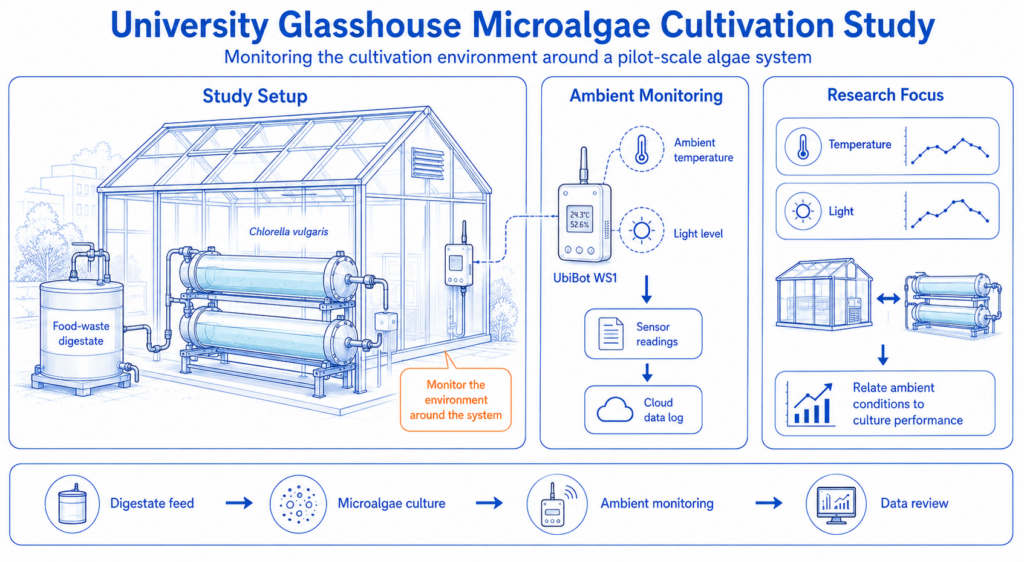
    In this study, UbiBot WS1 was used as an environmental monitoring sensor during the pilot-scale Chlorella vulgaris cultivation experiments at the Algal Innovation Centre glasshouse in Cambridge, UK. The paper does not state that UbiBot measured vitamin B12, algal biomass, pH, ammonia, or nutrient concentrations. Instead, UbiBot recorded the ambient glasshouse conditions that could affect algal growth, specifically temperature and light.
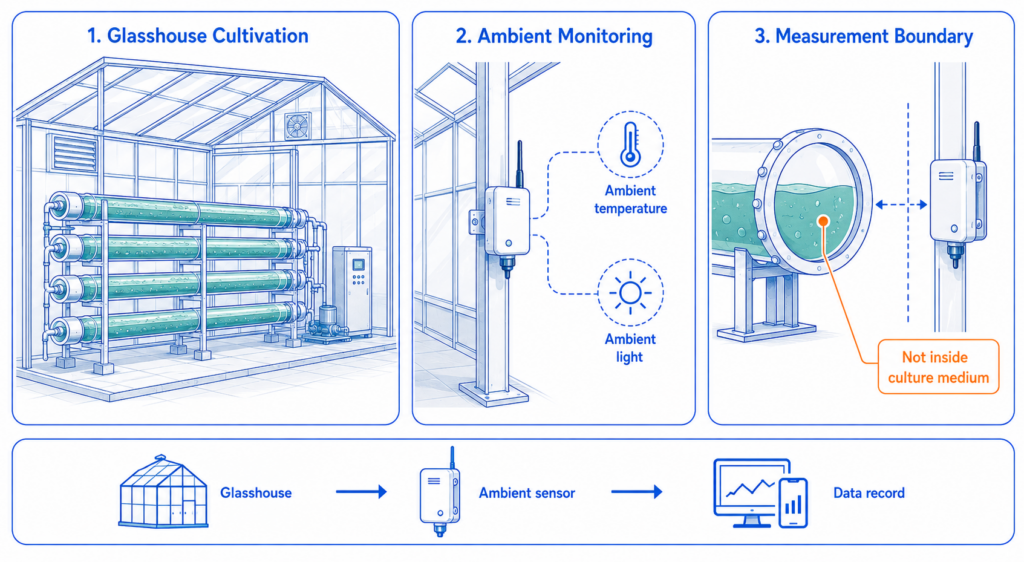
    The pilot-scale experiments used 150 L horizontal tubular photobioreactors. The research team compared Chlorella vulgaris grown in conventional TAP medium with cultures grown in diluted food waste-derived anaerobic digestate. The digestate medium was diluted to 2.75% v/v in the main 150 L experiment, corresponding to an ammonium nitrogen concentration of about 90 mg N/L, similar to the nitrogen level in TAP medium.

    The UbiBot WS1 sensor was deployed in the glasshouse environment, not inside the algae culture medium. It monitored the ambient temperature and light conditions surrounding the photobioreactors during the cultivation cycles. These data were presented together with biological and chemical measurements, including cell count, pH, dissolved oxygen, ammonium, phosphate, and later biochemical biomass composition.

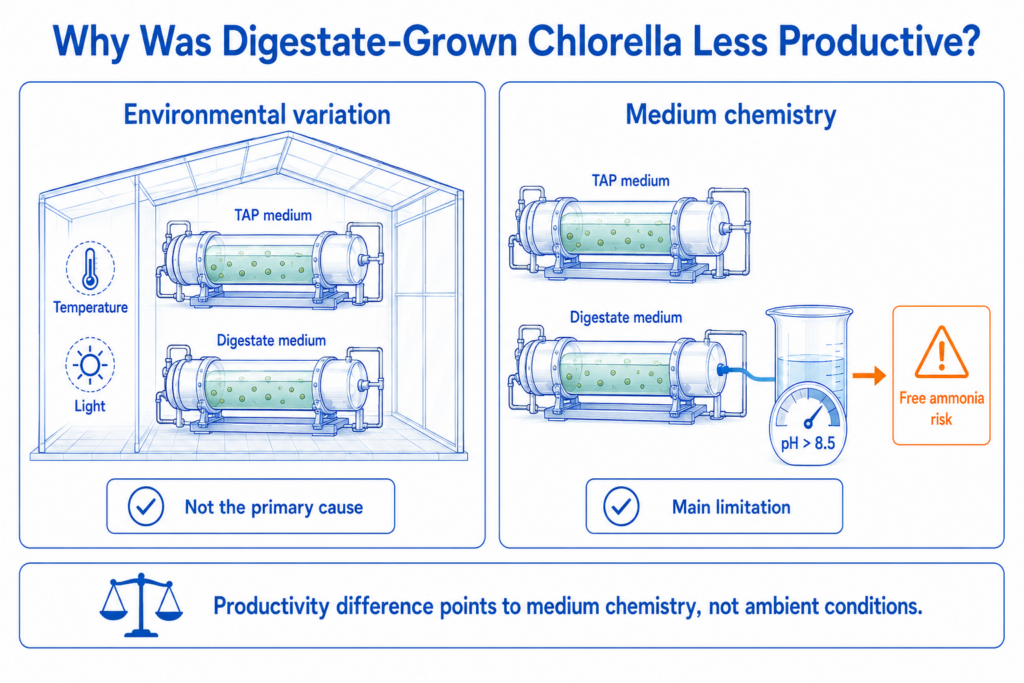
    The environmental records played an important interpretive role. During the 150 L pilot-scale comparison, the researchers observed that digestate-grown C. vulgaris reached a lower final biomass concentration than TAP-grown cultures. To investigate why, they examined multiple possible limiting factors. UbiBot-recorded temperature and light data showed that both conditions fluctuated substantially in the glasshouse and were sometimes suboptimal for C. vulgaris. However, the average differences in temperature and sunlight intensity between the TAP and digestate experiments were less than 10%.

    This helped the research team rule out temperature and light differences as the primary explanation for the approximately 40% lower biomass concentration in digestate-grown algae. The team then focused on other measured parameters. They found that pH rose above 8.3–8.8 in digestate-grown cultures, increasing the likelihood of free ammonia formation. Additional lab-scale and pilot-scale experiments confirmed that pH control reduced ammonia toxicity and improved productivity.

    Therefore, UbiBot’s role was environmental context monitoring and comparative interpretation. It supplied the glasshouse temperature and light data needed to judge whether external cultivation conditions could explain growth differences between TAP and digestate media. These records supported the conclusion that medium chemistry, especially pH-induced ammonia toxicity, was the main growth limitation.

    Research Methods and Data Collection Approach

    The study combined anaerobic digestion, lab-scale microalgae cultivation, pilot-scale photobioreactor cultivation, biochemical biomass analysis, vitamin B12 bioassays, elemental analysis, and microbiome analysis.
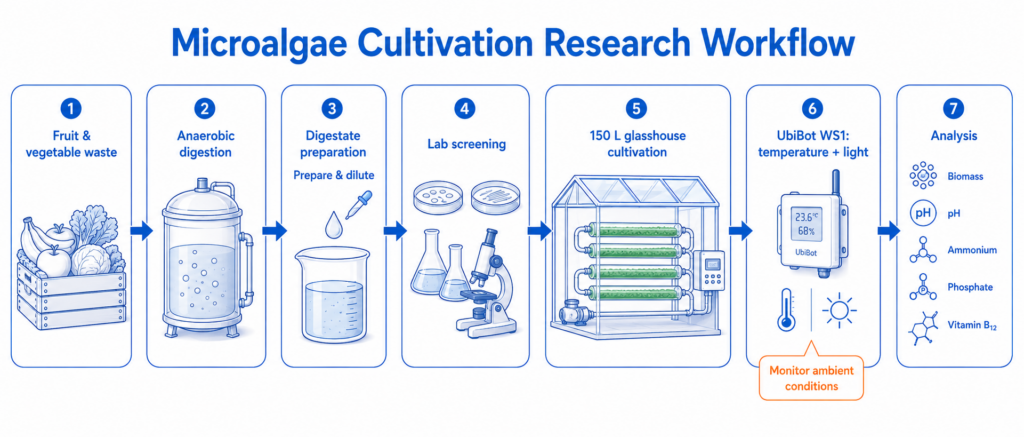
    First, fruit and vegetable waste was prepared from mango, banana, melon, and leafy vegetables. The mixture was homogenized and fed into two 5 L continuous stirred anaerobic digesters operated at 25 °C and 35 °C for 11 weeks. The digesters produced liquid anaerobic digestate, which was collected weekly. Digestate batches were labelled AD1 and AD2 according to collection time.

    Before algal cultivation, digestate was pasteurized and centrifuged to reduce pathogen risk and remove suspended solids that could block light penetration. The digestate was then diluted to manage ammonium nitrogen concentration.

    Lab-scale screening was performed in 24-well plates and flasks under controlled light and temperature. Chlorella vulgaris was grown in different digestate dilutions to determine suitable concentrations and identify inhibitory factors. The researchers measured optical density, cell density, pH, photosystem II maximum efficiency, ammonium, and phosphate.

    Pilot-scale cultivation was conducted in the Algal Innovation Centre glasshouse in Cambridge. Cultures were scaled up through laboratory subculturing, 10 L bags, and 150 L horizontal tubular photobioreactors. TAP medium was used as a benchmark, while diluted digestate was tested as the alternative nutrient source. The photobioreactors operated in semi-batch cycles, with 13-day growth cycles in the main comparison.

    During these pilot experiments, the UbiBot WS1 sensor monitored glasshouse ambient temperature and light. Other abiotic parameters were measured directly from the cultures using portable probes and analytical methods, including pH, dissolved oxygen, ammonium, and phosphate.

    After harvesting, algal biomass was dewatered, centrifuged, freeze-dried, powdered, and stored for analysis. Protein, carbohydrate, lipid, pigment, fatty acid, mineral, and potentially toxic element contents were measured. Vitamin B12 was quantified using a microbiological bioassay based on a B12-dependent Chlamydomonas reinhardtii strain. Microbial communities in digestate were analysed using 16S rRNA sequencing and bioinformatic prediction of cobamide biosynthesis capacity.

    Key Research Findings

    The study found that fruit and vegetable waste, which contained negligible vitamin B12, produced digestate enriched with B12 after anaerobic digestion. AD1 digestate contained 0.32 μg/mL B12, and additional commercial food-waste digestate samples contained between 0.06 and 1.16 mg/L B12.
    Chlorella vulgaris grown on digestate bioaccumulated vitamin B12. In the 150 L pilot-scale experiment, digestate-grown C. vulgaris contained 10.6 μg B12 per g dry weight after 13 days. TAP-grown C. vulgaris contained 4.1 μg B12 per g dry weight. The digestate-grown value was higher than many reported values for commercial C. vulgaris powders.

    The study showed that digestate could support C. vulgaris growth, but productivity was initially lower than in TAP medium. In the 150 L comparison, digestate-grown cultures reached 0.25 g/L dry biomass, while TAP-grown cultures reached 0.46 g/L.

    The monitored glasshouse temperature and light data helped the team assess whether environmental differences explained this lower productivity. Temperature and light fluctuated during the pilot-scale experiments, but the average differences between TAP and digestate cultivation periods were under 10%. This supported the interpretation that environmental differences were not the main cause of the reduced growth.

    Further analysis identified pH-induced ammonia toxicity as the main limitation in digestate-grown cultures. As pH increased above 8.5, a higher fraction of ammonium could convert into free ammonia, which is toxic to algae. When the researchers buffered digestate with Tris to keep pH below 8.5, cell concentration and photosynthetic efficiency improved substantially. At pilot scale in 5 L bags, buffered digestate cultures reached 0.44 g/L biomass, compared with 0.19 g/L in non-buffered digestate.

    Biochemical analysis showed that digestate-grown C. vulgaris maintained similar protein, carbohydrate, and lipid composition to TAP-grown biomass. Protein accounted for around 50%–55% of dry biomass. Digestate-grown algae had significantly higher total carotenoids and a higher share of polyunsaturated fatty acids, especially alpha-linolenic acid.

    Microbiome analysis showed that Proteobacteria, Firmicutes, and Bacteroidota dominated the digestate microbial community. Bioinformatic analysis suggested that about 35% of the top 100 bacterial genera with available data were likely B12 producers. This supported the interpretation that B12 accumulation in digestate was linked to bacterial biosynthesis during anaerobic digestion.

    What This Means for Digestate-Based Microalgae Cultivation

    This study shows that food waste-derived anaerobic digestate can be more than a low-cost nitrogen and phosphorus source. It may also contain bioactive micronutrients such as vitamin B12 that can be transferred into microalgal biomass.
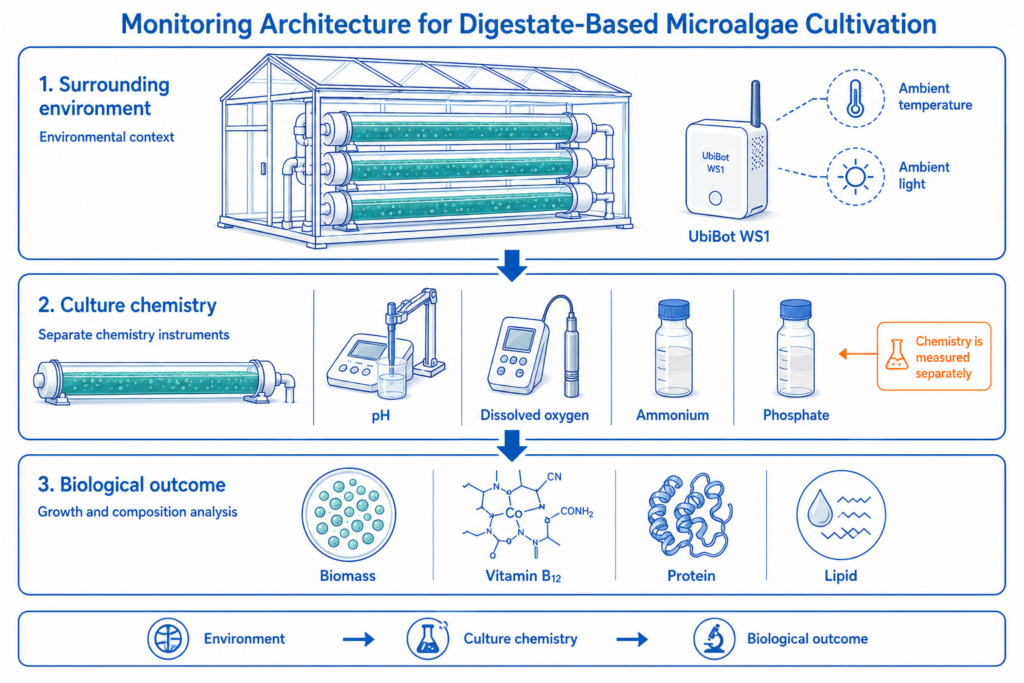
    For microalgae cultivation, the study highlights the need to monitor both medium chemistry and cultivation environment. Ambient temperature and light affect algal growth, especially in glasshouse or outdoor systems. UbiBot environmental monitoring helped determine that the observed productivity gap between TAP and digestate was not mainly caused by light or temperature differences.

    For digestate valorisation, the findings suggest that anaerobic digestion can generate micronutrient value beyond biogas and fertilizer. If algae grown on digestate can accumulate B12 and retain strong protein and lipid profiles, the resulting biomass may have higher value for feed or aquaculture applications.

    For process optimization, the research shows that simple dilution may not be enough. Diluting digestate reduces ammonia toxicity but also dilutes other nutrients. The study found that pH control can reduce free ammonia formation while allowing greater use of digestate.

    For aquaculture and animal feed, B12-enriched C. vulgaris may be especially relevant because modern feed formulations increasingly rely on plant-based ingredients, which typically contain little B12. Digestate-grown microalgae could help recover micronutrients from waste streams and reintroduce them into biological production systems.

    Application Value of UbiBot Devices

    UbiBot WS1 demonstrated practical value as an environmental monitoring tool in pilot-scale microalgae cultivation.

    First, it provided ambient temperature and light data from the glasshouse where the photobioreactors were operated. These data documented the real cultivation environment rather than assuming constant laboratory conditions.

    Second, the UbiBot data supported comparison between TAP and digestate experiments. Because the two cultivation periods occurred under natural glasshouse fluctuations, environmental records were needed to assess whether growth differences were caused by external conditions or by the digestate medium itself.

    Third, the environmental data helped contextualize pilot-scale productivity. The researchers observed that temperature and light were sometimes suboptimal, but the average differences between experimental runs were not large enough to explain the reduced growth in digestate.

    Fourth, UbiBot monitoring complemented direct culture measurements. While pH, dissolved oxygen, ammonium, phosphate, cell density, and B12 were measured by other instruments and assays, UbiBot supplied the surrounding environmental data layer.

    Fifth, the use of a compact sensor in a glasshouse photobioreactor setting illustrates how environmental IoT monitoring can support scale-up experiments where natural light and temperature vary over time.

    Overall, UbiBot’s value in this study was not direct measurement of B12 or algae quality. Its value was providing glasshouse temperature and light records that helped the researchers interpret growth performance and identify medium chemistry, rather than environmental variation, as the key limitation.

    Extended Application Scenarios

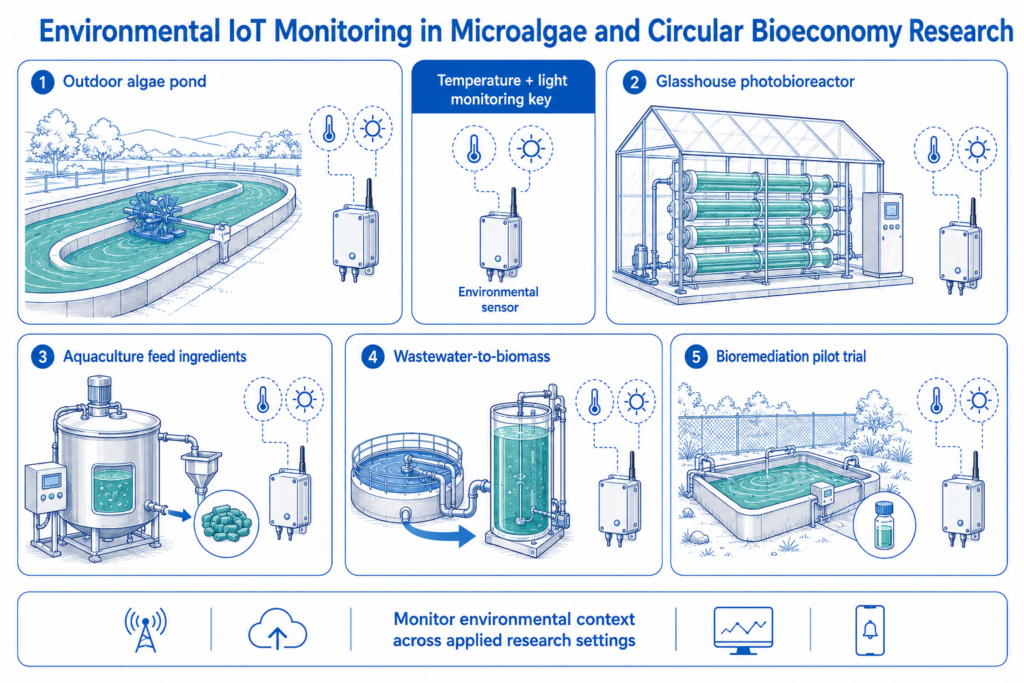
    The monitoring approach used in this study can be extended to several related scenarios:

    1. Outdoor microalgae cultivation
      Used to monitor temperature and light conditions around ponds, bags, or tubular photobioreactors.
    2. Glasshouse photobioreactor research
      Used to document environmental variability in semi-controlled algal cultivation systems.
    3. Digestate-based algae cultivation
      Used to distinguish environmental effects from medium-related inhibition such as ammonia toxicity.
    4. Aquaculture feed ingredient production
      Used to support growth monitoring for nutrient-enriched microalgal biomass.
    5. Wastewater-to-biomass systems
      Used to record cultivation conditions when algae are grown on nutrient-rich waste streams.
    6. Bioremediation pilot trials
      Used to track temperature and light as supporting variables in nutrient removal and biomass production studies.
    7. Algal productivity optimization
      Used with pH, dissolved oxygen, and nutrient monitoring to identify limiting factors.
    8. Circular bioeconomy research
      Used as part of integrated monitoring for waste valorisation, biogas digestate upgrading, and high-value biomass production.
    FAQ

    1. Which UbiBot product was used in the study?

    The study used a UbiBot WS1 sensor.

    2. What data did UbiBot collect?

    UbiBot WS1 monitored ambient light and temperature inside the Algal Innovation Centre glasshouse during pilot-scale microalgae cultivation.

    3. Where was UbiBot deployed?

    It was used in the glasshouse environment around the pilot-scale cultivation system at the Algal Innovation Centre in Cambridge, UK.

    4. What was the sampling frequency?

    The paper does not explicitly state the raw UbiBot logging interval. It describes monitored ambient temperature and light data and presents solar irradiance as hourly rolling averages of continuous readings.

    5. How long did the monitored cultivation experiments last?

    The main TAP and digestate comparison used 13-day cultivation periods in 150 L photobioreactors. TAP cultivation cycles occurred between August 31 and October 7, 2021, and the digestate cycle ran from October 7 to October 20, 2021.

    6. How were UbiBot data used?

    The data were used to document glasshouse temperature and light conditions and to assess whether environmental variation explained growth differences between TAP-grown and digestate-grown C. vulgaris.

    7. Did UbiBot measure vitamin B12?

    No. Vitamin B12 was measured using a microbiological bioassay with a B12-dependent Chlamydomonas reinhardtii strain.

    8. Did UbiBot measure pH or ammonia?

    No. pH, dissolved oxygen, and ammonium were measured using separate analytical probes and methods. UbiBot monitored ambient temperature and light.

    9. What was the main finding about digestate-grown algae?

    1. vulgaris grown on digestate bioaccumulated 10.6 μg B12 per g dry weight, while pH-induced ammonia toxicity was identified as the main factor limiting productivity.

    10. Why is this research important?

    It shows that food waste-derived digestate can support B12-enriched microalgae production, while environmental monitoring helps interpret pilot-scale growth performance under real glasshouse conditions.


    Related Resources

    University of Cambridge Study Uses UbiBot WS1 for Perishable Food Supply Chain Monitoring in an Autonomous Supply Chain Prototype
    University of Amsterdam Study Uses UbiBot WS1 to Monitor Indoor Environment During a COVID-19 Social Distancing Art Fair Experiment
    How Is UbiBot Referenced in Railway Digital Twin Research?
    Pennsylvania State University Study Uses UbiBot WS1 for Indoor Microenvironment Monitoring in Individualized Thermal Preference Research
    AGH University of Science and Technology Uses UbiBot WS1 Wi-Fi for Railway Turnout Weather and Rail Temperature Monitoring
    Chicken Farm Temperature and Humidity Monitoring
    Laboratory Temperature & Humidity Monitor
    Hot Spa & Ubibot in Cold Winter
    menu-header-svg
    Search
    • Explore Knowledge
      • Comparison & Selection
      • Industry Solution
      • Product & Device
      • Criterion & Compliance
      • Deployment & Usage
      • Technology & Principle
    • Academic Research
    • In-depth Tech

    Academic Research

    See More >>

    University of Cambridge Study Uses UbiBot WS1 for Glasshouse Environment Monitoring in Chlorella vulgaris Digestate Cultivation

    Research Overview

    Paper Title Vitamin B12 bioaccumulation in Chlorella vulgaris grown on food waste-derived anaerobic digestate
    Publisher Elsevier B.V.
    Journey Algal Research
    Publish Time Available online October 12, 2023; Algal Research 75, 2023, Article 103290
    Authors / Institutions Konstantinos P. Papadopoulos, Lorraine Archer, Ana Camila Zenteno Illanes, Ellen L. Harrison, Fiona Taylor, Matthew P. Davey, Daniela Ahuatzin Gallardo, Allan J. Komakech, Shahla Radmehr, Andre Holzer, Alison G. Smith, and Payam Mehrshahi from the University of Cambridge; Marcella Fernandes de Souza and Erik Meers from Ghent University
    UbiBot Product UbiBot WS1 sensor
    Data Collected Ambient temperature and ambient light / solar irradiance conditions inside the Algal Innovation Centre glasshouse
    Sampling Frequency The paper describes continuous monitoring and presents light data as hourly rolling averages, but it does not explicitly state the raw UbiBot logging interval
    Research Period Pilot-scale glasshouse cultivation included TAP medium cycles between August 31 and October 7, 2021, and one digestate cultivation cycle from October 7 to October 20, 2021. The main 150 L TAP-versus-digestate comparison used 13-day cultivation periods.
    Application Scenario Microalgae cultivation monitoring, anaerobic digestate valorisation, Chlorella vulgaris growth analysis, vitamin B12 bioaccumulation, glasshouse photobioreactor monitoring, aquaculture feed ingredient research
    Original Link https://doi.org/10.1016/j.algal.2023.103290

    Research Background: What Problem Did This Study Address?

    Anaerobic digestion is widely used to convert organic waste into biogas. Alongside biogas, the process generates liquid digestate, a nutrient-rich stream commonly applied to farmland as fertilizer. Digestate is usually valued for macronutrients such as nitrogen and phosphorus, but its bioactive micronutrients are less understood.

    This study explored whether digestate produced from fruit and vegetable waste could become enriched with vitamin B12 during anaerobic digestion, even though plants themselves contain negligible B12. The researchers then examined whether Chlorella vulgaris could grow on this digestate and bioaccumulate B12 into algal biomass.

    The question is important because microalgae are increasingly studied as food, feed, aquaculture, and bioremediation resources. If digestate can supply both nutrients and bioactive compounds, it may support production of higher-value algal biomass while also recycling waste-derived nutrients.

    However, growing microalgae in digestate is technically difficult. Digestate may contain high ammonium, suspended solids, and organic matter. When pH rises, ammonium can shift toward free ammonia, which is toxic to algal cells. Outdoor or glasshouse cultivation also introduces fluctuating temperature and light conditions.

    To separate environmental effects from medium-related inhibition, the researchers monitored glasshouse ambient temperature and light conditions during pilot-scale cultivation. UbiBot WS1 was used for this environmental monitoring layer, helping the team interpret whether reduced algal growth in digestate was likely caused by outdoor temperature or light differences, or by chemical conditions in the digestate medium.

    The Specific Role of  UbiBot WS1 Chlorella Monitoring Study

    In this study, UbiBot WS1 was used as an environmental monitoring sensor during the pilot-scale Chlorella vulgaris cultivation experiments at the Algal Innovation Centre glasshouse in Cambridge, UK. The paper does not state that UbiBot measured vitamin B12, algal biomass, pH, ammonia, or nutrient concentrations. Instead, UbiBot recorded the ambient glasshouse conditions that could affect algal growth, specifically temperature and light.

    The pilot-scale experiments used 150 L horizontal tubular photobioreactors. The research team compared Chlorella vulgaris grown in conventional TAP medium with cultures grown in diluted food waste-derived anaerobic digestate. The digestate medium was diluted to 2.75% v/v in the main 150 L experiment, corresponding to an ammonium nitrogen concentration of about 90 mg N/L, similar to the nitrogen level in TAP medium.

    The UbiBot WS1 sensor was deployed in the glasshouse environment, not inside the algae culture medium. It monitored the ambient temperature and light conditions surrounding the photobioreactors during the cultivation cycles. These data were presented together with biological and chemical measurements, including cell count, pH, dissolved oxygen, ammonium, phosphate, and later biochemical biomass composition.

    The environmental records played an important interpretive role. During the 150 L pilot-scale comparison, the researchers observed that digestate-grown C. vulgaris reached a lower final biomass concentration than TAP-grown cultures. To investigate why, they examined multiple possible limiting factors. UbiBot-recorded temperature and light data showed that both conditions fluctuated substantially in the glasshouse and were sometimes suboptimal for C. vulgaris. However, the average differences in temperature and sunlight intensity between the TAP and digestate experiments were less than 10%.

    This helped the research team rule out temperature and light differences as the primary explanation for the approximately 40% lower biomass concentration in digestate-grown algae. The team then focused on other measured parameters. They found that pH rose above 8.3–8.8 in digestate-grown cultures, increasing the likelihood of free ammonia formation. Additional lab-scale and pilot-scale experiments confirmed that pH control reduced ammonia toxicity and improved productivity.

    Therefore, UbiBot’s role was environmental context monitoring and comparative interpretation. It supplied the glasshouse temperature and light data needed to judge whether external cultivation conditions could explain growth differences between TAP and digestate media. These records supported the conclusion that medium chemistry, especially pH-induced ammonia toxicity, was the main growth limitation.

    Research Methods and Data Collection Approach

    The study combined anaerobic digestion, lab-scale microalgae cultivation, pilot-scale photobioreactor cultivation, biochemical biomass analysis, vitamin B12 bioassays, elemental analysis, and microbiome analysis.

    First, fruit and vegetable waste was prepared from mango, banana, melon, and leafy vegetables. The mixture was homogenized and fed into two 5 L continuous stirred anaerobic digesters operated at 25 °C and 35 °C for 11 weeks. The digesters produced liquid anaerobic digestate, which was collected weekly. Digestate batches were labelled AD1 and AD2 according to collection time.

    Before algal cultivation, digestate was pasteurized and centrifuged to reduce pathogen risk and remove suspended solids that could block light penetration. The digestate was then diluted to manage ammonium nitrogen concentration.

    Lab-scale screening was performed in 24-well plates and flasks under controlled light and temperature. Chlorella vulgaris was grown in different digestate dilutions to determine suitable concentrations and identify inhibitory factors. The researchers measured optical density, cell density, pH, photosystem II maximum efficiency, ammonium, and phosphate.

    Pilot-scale cultivation was conducted in the Algal Innovation Centre glasshouse in Cambridge. Cultures were scaled up through laboratory subculturing, 10 L bags, and 150 L horizontal tubular photobioreactors. TAP medium was used as a benchmark, while diluted digestate was tested as the alternative nutrient source. The photobioreactors operated in semi-batch cycles, with 13-day growth cycles in the main comparison.

    During these pilot experiments, the UbiBot WS1 sensor monitored glasshouse ambient temperature and light. Other abiotic parameters were measured directly from the cultures using portable probes and analytical methods, including pH, dissolved oxygen, ammonium, and phosphate.

    After harvesting, algal biomass was dewatered, centrifuged, freeze-dried, powdered, and stored for analysis. Protein, carbohydrate, lipid, pigment, fatty acid, mineral, and potentially toxic element contents were measured. Vitamin B12 was quantified using a microbiological bioassay based on a B12-dependent Chlamydomonas reinhardtii strain. Microbial communities in digestate were analysed using 16S rRNA sequencing and bioinformatic prediction of cobamide biosynthesis capacity.

    Key Research Findings

    The study found that fruit and vegetable waste, which contained negligible vitamin B12, produced digestate enriched with B12 after anaerobic digestion. AD1 digestate contained 0.32 μg/mL B12, and additional commercial food-waste digestate samples contained between 0.06 and 1.16 mg/L B12.

    Chlorella vulgaris grown on digestate bioaccumulated vitamin B12. In the 150 L pilot-scale experiment, digestate-grown C. vulgaris contained 10.6 μg B12 per g dry weight after 13 days. TAP-grown C. vulgaris contained 4.1 μg B12 per g dry weight. The digestate-grown value was higher than many reported values for commercial C. vulgaris powders.

    The study showed that digestate could support C. vulgaris growth, but productivity was initially lower than in TAP medium. In the 150 L comparison, digestate-grown cultures reached 0.25 g/L dry biomass, while TAP-grown cultures reached 0.46 g/L.

    The monitored glasshouse temperature and light data helped the team assess whether environmental differences explained this lower productivity. Temperature and light fluctuated during the pilot-scale experiments, but the average differences between TAP and digestate cultivation periods were under 10%. This supported the interpretation that environmental differences were not the main cause of the reduced growth.

    Further analysis identified pH-induced ammonia toxicity as the main limitation in digestate-grown cultures. As pH increased above 8.5, a higher fraction of ammonium could convert into free ammonia, which is toxic to algae. When the researchers buffered digestate with Tris to keep pH below 8.5, cell concentration and photosynthetic efficiency improved substantially. At pilot scale in 5 L bags, buffered digestate cultures reached 0.44 g/L biomass, compared with 0.19 g/L in non-buffered digestate.

    Biochemical analysis showed that digestate-grown C. vulgaris maintained similar protein, carbohydrate, and lipid composition to TAP-grown biomass. Protein accounted for around 50%–55% of dry biomass. Digestate-grown algae had significantly higher total carotenoids and a higher share of polyunsaturated fatty acids, especially alpha-linolenic acid.

    Microbiome analysis showed that Proteobacteria, Firmicutes, and Bacteroidota dominated the digestate microbial community. Bioinformatic analysis suggested that about 35% of the top 100 bacterial genera with available data were likely B12 producers. This supported the interpretation that B12 accumulation in digestate was linked to bacterial biosynthesis during anaerobic digestion.

    What This Means for Digestate-Based Microalgae Cultivation

    This study shows that food waste-derived anaerobic digestate can be more than a low-cost nitrogen and phosphorus source. It may also contain bioactive micronutrients such as vitamin B12 that can be transferred into microalgal biomass.

    For microalgae cultivation, the study highlights the need to monitor both medium chemistry and cultivation environment. Ambient temperature and light affect algal growth, especially in glasshouse or outdoor systems. UbiBot environmental monitoring helped determine that the observed productivity gap between TAP and digestate was not mainly caused by light or temperature differences.

    For digestate valorisation, the findings suggest that anaerobic digestion can generate micronutrient value beyond biogas and fertilizer. If algae grown on digestate can accumulate B12 and retain strong protein and lipid profiles, the resulting biomass may have higher value for feed or aquaculture applications.

    For process optimization, the research shows that simple dilution may not be enough. Diluting digestate reduces ammonia toxicity but also dilutes other nutrients. The study found that pH control can reduce free ammonia formation while allowing greater use of digestate.

    For aquaculture and animal feed, B12-enriched C. vulgaris may be especially relevant because modern feed formulations increasingly rely on plant-based ingredients, which typically contain little B12. Digestate-grown microalgae could help recover micronutrients from waste streams and reintroduce them into biological production systems.

    Application Value of UbiBot Devices

    UbiBot WS1 demonstrated practical value as an environmental monitoring tool in pilot-scale microalgae cultivation.

    First, it provided ambient temperature and light data from the glasshouse where the photobioreactors were operated. These data documented the real cultivation environment rather than assuming constant laboratory conditions.

    Second, the UbiBot data supported comparison between TAP and digestate experiments. Because the two cultivation periods occurred under natural glasshouse fluctuations, environmental records were needed to assess whether growth differences were caused by external conditions or by the digestate medium itself.

    Third, the environmental data helped contextualize pilot-scale productivity. The researchers observed that temperature and light were sometimes suboptimal, but the average differences between experimental runs were not large enough to explain the reduced growth in digestate.

    Fourth, UbiBot monitoring complemented direct culture measurements. While pH, dissolved oxygen, ammonium, phosphate, cell density, and B12 were measured by other instruments and assays, UbiBot supplied the surrounding environmental data layer.

    Fifth, the use of a compact sensor in a glasshouse photobioreactor setting illustrates how environmental IoT monitoring can support scale-up experiments where natural light and temperature vary over time.

    Overall, UbiBot’s value in this study was not direct measurement of B12 or algae quality. Its value was providing glasshouse temperature and light records that helped the researchers interpret growth performance and identify medium chemistry, rather than environmental variation, as the key limitation.

    Extended Application Scenarios

    The monitoring approach used in this study can be extended to several related scenarios:

    1. Outdoor microalgae cultivation
      Used to monitor temperature and light conditions around ponds, bags, or tubular photobioreactors.
    2. Glasshouse photobioreactor research
      Used to document environmental variability in semi-controlled algal cultivation systems.
    3. Digestate-based algae cultivation
      Used to distinguish environmental effects from medium-related inhibition such as ammonia toxicity.
    4. Aquaculture feed ingredient production
      Used to support growth monitoring for nutrient-enriched microalgal biomass.
    5. Wastewater-to-biomass systems
      Used to record cultivation conditions when algae are grown on nutrient-rich waste streams.
    6. Bioremediation pilot trials
      Used to track temperature and light as supporting variables in nutrient removal and biomass production studies.
    7. Algal productivity optimization
      Used with pH, dissolved oxygen, and nutrient monitoring to identify limiting factors.
    8. Circular bioeconomy research
      Used as part of integrated monitoring for waste valorisation, biogas digestate upgrading, and high-value biomass production.

    FAQ

    1. Which UbiBot product was used in the study?

    The study used a UbiBot WS1 sensor.

    2. What data did UbiBot collect?

    UbiBot WS1 monitored ambient light and temperature inside the Algal Innovation Centre glasshouse during pilot-scale microalgae cultivation.

    3. Where was UbiBot deployed?

    It was used in the glasshouse environment around the pilot-scale cultivation system at the Algal Innovation Centre in Cambridge, UK.

    4. What was the sampling frequency?

    The paper does not explicitly state the raw UbiBot logging interval. It describes monitored ambient temperature and light data and presents solar irradiance as hourly rolling averages of continuous readings.

    5. How long did the monitored cultivation experiments last?

    The main TAP and digestate comparison used 13-day cultivation periods in 150 L photobioreactors. TAP cultivation cycles occurred between August 31 and October 7, 2021, and the digestate cycle ran from October 7 to October 20, 2021.

    6. How were UbiBot data used?

    The data were used to document glasshouse temperature and light conditions and to assess whether environmental variation explained growth differences between TAP-grown and digestate-grown C. vulgaris.

    7. Did UbiBot measure vitamin B12?

    No. Vitamin B12 was measured using a microbiological bioassay with a B12-dependent Chlamydomonas reinhardtii strain.

    8. Did UbiBot measure pH or ammonia?

    No. pH, dissolved oxygen, and ammonium were measured using separate analytical probes and methods. UbiBot monitored ambient temperature and light.

    9. What was the main finding about digestate-grown algae?

    1. vulgaris grown on digestate bioaccumulated 10.6 μg B12 per g dry weight, while pH-induced ammonia toxicity was identified as the main factor limiting productivity.

    10. Why is this research important?

    It shows that food waste-derived digestate can support B12-enriched microalgae production, while environmental monitoring helps interpret pilot-scale growth performance under real glasshouse conditions.

    分享

    LinkedIn2

    Facebook2

    X

    Newsletter Signup

    Related Resources

    University of Cambridge Study Uses UbiBot WS1 for Perishable Food Supply Chain Monitoring in an Autonomous Supply Chain Prototype
    University of Amsterdam Study Uses UbiBot WS1 to Monitor Indoor Environment During a COVID-19 Social Distancing Art Fair Experiment
    How Is UbiBot Referenced in Railway Digital Twin Research?
    Pennsylvania State University Study Uses UbiBot WS1 for Indoor Microenvironment Monitoring in Individualized Thermal Preference Research
    AGH University of Science and Technology Uses UbiBot WS1 Wi-Fi for Railway Turnout Weather and Rail Temperature Monitoring
    Chicken Farm Temperature and Humidity Monitoring
    Laboratory Temperature & Humidity Monitor
    Hot Spa & Ubibot in Cold Winter
    menu-header-svg
    Search
    • Explore Knowledge
      • Comparison & Selection
      • Industry Solution
      • Product & Device
      • Criterion & Compliance
      • Deployment & Usage
      • Technology & Principle
    • Academic Research
    • In-depth Tech
    Enter Your Information

    Confirm

    Products

    Dashboards

    Support

    Purchase

    Company

    Smart Sensing

    UbiBot Web Console

    APP Download

    UbiBot Online Store

    News

    Smart Control

    UbiBot Space

    Product Docs & APIs

    Find Distributors

    About Us

    Smart Video

    UbiBot On-Premises

    Helpdesk & FAQ

    Volume Pricing

    Contact Us

    LoRa Products

    Agency Web Console

    Video Center

    Architecture

    Software & Platform


    Pricing


    System Status

    External Sensors


    Become a Distributor

    Accessories


    Become an Affiliate

    Global SIM


    Positioning System


    Products

    Dashboards

    Business Partners

    WS1

    UbiBot Web Console

    Volume Pricing

    WS1 Pro

    UbiBot Space

    Become a Distributor

    GS1

    UbiBot Support Desk

    Affiliates

    GS2

    Agency Web Console


    MS1


    SP1


    Accessories


    Docs

    Purchase

    Company

    Platform API

    Pricing

    News

    Q&A

    UbiBot Partners

    About us

    Privacy Policy

    Online Store

    Contact

    Terms of Service


    System Status

    Products

    Dashboards

    Smart Sensing

    UbiBot Web Console

    Smart Control

    UbiBot Space

    Smart Video

    UbiBot On-Premises

    LoRa Products

    Agency Web Console

    Software & Platform


    External Sensors


    Accessories


    Global SIM


    Positioning System


    Support

    Purchase

    APP Download

    UbiBot Online Store

    Product Docs & APIs

    Find Distributors

    Helpdesk & FAQ

    Volume Pricing

    Video Center


    Pricing


    Company

    News

    About Us

    Contact Us

    Architecture

    System Status

    Become a Distributor

    Become an Affiliate

    Language:
    English 日本語 (ベータ)  
    Language:

    English

    日本語 (ベータ)


    IoT Product Family:
    ubibotico     Wireless environmental sensing products and smart building solutions
    ubitrackico     UWB-based real-time indoor tracking solutions with 30cm accuracy

    IoT Product Family:

    ubibotico  Wireless environmental sensing products and smart building solutions
    ubitrackico  UWB-based real-time indoor tracking solutions with 30cm accuracy

    © 2013-2026 UbiBot.com. All rights reserved.

    Terms of Service | Privacy Policy | Compliance

    youtube facebook twitter