
UBiBot Logo
UBiBot Logo
  • UBiBot Logo
  • Home
  • Products

    NEW

  • Pricing
  • Support
  • About Us
  • Download
  • magnifying-glass  Search
  • magnifying-glass header-close
  • Sign in Sign in
    Public Web Console Public Web Console
    On-Premises App Center On-Premises App Center
  • Home
  • Products

    NEW

  • Pricing
  • Support
  • About us
  • Download
  •  Public Web Console
  •  On-Premises App Center
  • Where to Buy

Learn Hub

Explore Knowledge Academic Research In-depth Tech

Share

LinkedIn

Facebook

X (Twitter)

Newsletter Signup

Table of contents

    University of Alberta Study Uses UbiBot WS1 Pro to Monitor Environmental Conditions in Hydroponic Lettuce Production

    Research Overview

    Item Content
    Paper Title Comparison of Energy-use Efficiency for Lettuce Plantation under Nutrient Film Technique and Deep-Water Culture Hydroponic Systems
    Publisher Elsevier
    Journey Procedia Computer Science
    Publish Time 2023; available online in Procedia Computer Science 217, 11–19
    Authors / Institutions Syed Abreez Gillani, Rabiya Abbasi, and Rafiq Ahmad from Aquaponics 4.0 Learning Factory, Department of Mechanical Engineering, University of Alberta, Canada; Pablo Martinez from Northumbria University, United Kingdom
    UbiBot Product UbiBot WS1 Pro smart sensor
    Data Collected Room temperature, relative humidity, and illumination
    Sampling Frequency The paper states that data were monitored at constant intervals, but does not specify the exact interval length
    Research Period Full lettuce growth period from seeding to harvesting; 21 days in growth chambers followed by 5 weeks in NFT and DWC hydroponic systems
    Application Scenario Hydroponic lettuce cultivation, aquaponics facility monitoring, controlled-environment agriculture, energy-use efficiency comparison between NFT and DWC systems
    Original Link https://doi.org/10.1016/j.procs.2022.12.197

    Research Background: What Problem Did This Study Address?

    Closed plant production systems, hydroponic farms, and aquaponics facilities are increasingly used to grow crops in controlled environments. These systems can reduce dependence on soil, improve water-use efficiency, and make year-round food production possible in places where outdoor farming is limited by climate, land availability, or water resources.

    However, indoor plant production also brings a major challenge: energy consumption. Artificial lighting, pumps, water circulation, aeration, heating, ventilation, and air-conditioning can all increase the operating cost and environmental footprint of hydroponic production. For this reason, researchers need to understand not only how much crop biomass a system produces, but also how much energy is consumed to produce that biomass.

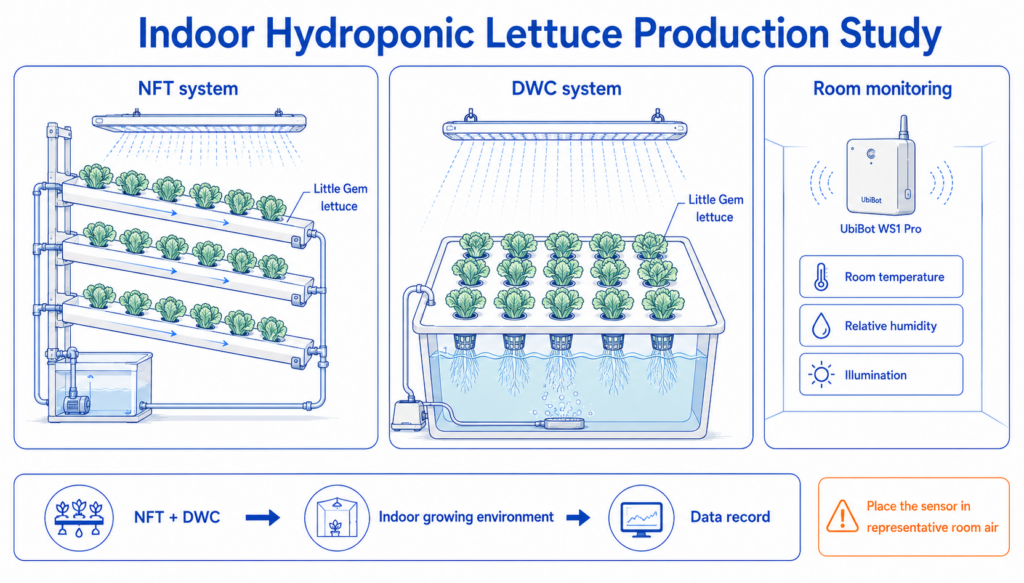
    This study compared two common hydroponic systems: nutrient film technique, known as NFT, and deep-water culture, known as DWC. Both systems can be used to grow lettuce, but they differ in how water and nutrients are delivered to plant roots. NFT circulates a thin layer of nutrient solution through grow channels, while DWC suspends plants over nutrient-rich water and relies on aeration to maintain oxygen levels.

    The research question was whether NFT or DWC offers better energy-use efficiency for growing Little Gem lettuce in an indoor aquaponics facility. To make the comparison meaningful, the researchers needed to maintain and record comparable environmental conditions. In this context, UbiBot WS1 Pro was used to monitor real indoor environmental data during the crop growth period.

    The Specific Role of  UbiBot WS1 Pro Hydroponic Lettuce Monitoring

    In this study, UbiBot WS1 Pro was used as an environmental monitoring device inside the indoor aquaponics facility at the University of Alberta. The paper does not present UbiBot as the device that proved which hydroponic system is better. Instead, UbiBot was used to collect environmental condition data that helped ensure the NFT and DWC systems were compared under controlled and comparable conditions.
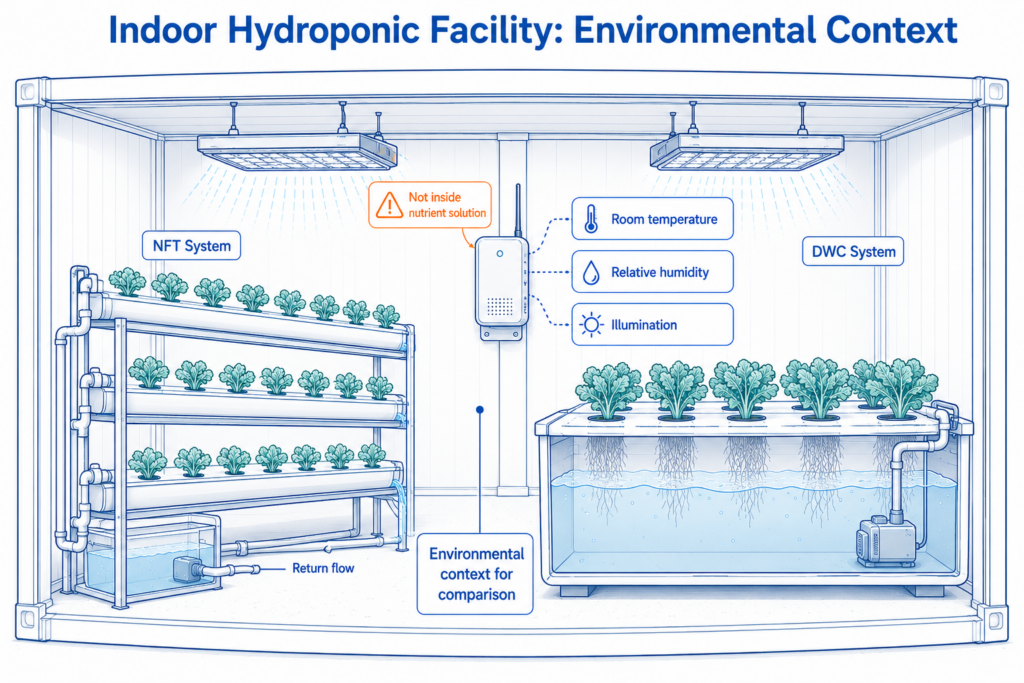
    The experiment was carried out in AllFactory, an aquaponics facility at the University of Alberta, Canada. Both NFT and DWC systems were placed indoors in the same facility. The facility’s heating, cooling, and air-conditioning were provided by building services and controlled by a thermostat. Under these conditions, the UbiBot WS1 Pro smart sensor was used to monitor room temperature, relative humidity, and illumination at constant intervals.

    These environmental data were important because the study compared energy-use efficiency between two hydroponic systems. If temperature, humidity, and light conditions were not recorded or controlled, differences in lettuce growth could be wrongly attributed to the hydroponic system type, when they might actually result from environmental variation. By recording these parameters throughout the experiment, the researchers could show that both systems were grown under similar environmental conditions.

    The recorded daily average values showed that both NFT and DWC systems were maintained at 70.2% relative humidity and 18.8 °C ambient temperature. The PPFD was also measured and optimized so that both systems received similar light conditions: approximately 258.33 µmol·m⁻²·s⁻¹ for the NFT system and 269.10 µmol·m⁻²·s⁻¹ for the DWC system.

    UbiBot data were therefore used for environmental recording and experimental condition control. The temperature, humidity, and illumination records helped support the comparability of the NFT and DWC growth environments, allowing the researchers to focus the analysis on plant growth, energy consumption, and energy-use efficiency.

    Research Methods and Data Collection Approach

    The experiment used Little Gem lettuce, also known as Lactuca Sativa L., as the test crop. The researchers selected this lettuce variety because its compact head size makes it suitable for small-scale vertical farming and controlled-environment production.
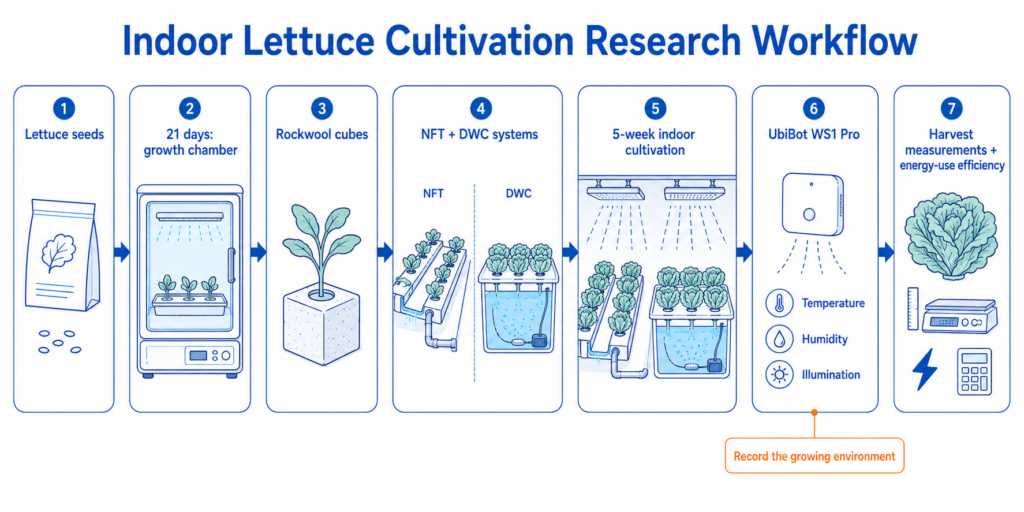
    Fifty seeds were first placed in growth chambers at 18 °C and 70% relative humidity. During the germination stage, the seeds were irradiated with LED lighting using a 12-hour photoperiod. After 21 days, 40 healthy seedlings were transplanted into rockwool cubes.

    The 40 seedlings were divided equally between two hydroponic systems. Twenty seedlings were placed in the NFT system, and twenty seedlings were placed in the DWC system. Both systems used the same nutrient solution. The NFT system was connected to a sump containing 20 gallons of nutrient-rich water and used a submersible pump to circulate the solution. The DWC system also used 20 gallons of nutrient solution and used air bubblers connected to air pumps to maintain dissolved oxygen.

    Both systems were illuminated by LED lights with a maximum photosynthetic photon flux of 200 µmol·s⁻¹. Because the two systems had different dimensions, the researchers optimized light intensity to provide similar photosynthetic photon flux density to both systems. The plants then grew under a 16-hour photoperiod for 5 weeks.

    During the experiment, UbiBot WS1 Pro monitored room temperature, relative humidity, and illumination. Electroconductivity and pH were also recorded using separate Bluelab instruments and balanced for both systems. Energy consumption from LED lights and pumps was measured using smart energy meters, with the data transmitted to a cloud platform.

    After the 5-week cultivation period, the researchers harvested the lettuce and measured plant fresh weight, shoot weight, root weight, plant height, plant width, root length, and leaf count. Energy-use efficiency was calculated by dividing plant fresh weight by total energy consumption in kilowatt-hours.

    Key Research Findings

    The study found that the NFT system achieved higher energy-use efficiency than the DWC system when growing Little Gem lettuce under the tested indoor conditions.

    Both systems were grown in the same indoor facility under similar environmental conditions. The UbiBot-monitored room conditions were maintained at 70.2% relative humidity and 18.8 °C ambient temperature for both systems. The pH values were also maintained at 5.9, while electroconductivity was similar between systems.
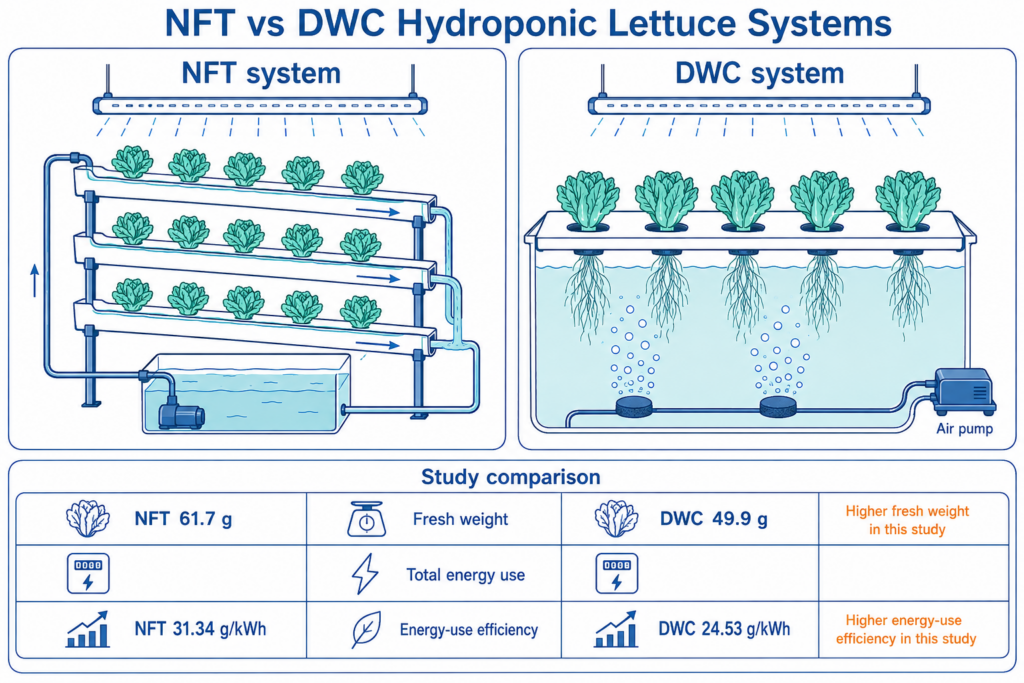
    Energy consumption differed between the systems. The DWC system consumed more energy for artificial illumination, which the researchers attributed to the higher light intensity required to ensure comparable PPFD between the two systems. The NFT system required more energy for water circulation because it used a pump to move nutrient solution through the grow channels. In total, the DWC system consumed 3.25% more energy than the NFT system.

    Growth measurements showed that NFT-grown lettuce had higher biomass. The mean fresh weight of NFT lettuce was 61.7 g, while the mean fresh weight of DWC lettuce was 49.9 g. This means NFT-grown lettuce had a 23.6% higher mean fresh weight. NFT also produced higher shoot and root weights, while plant height, plant width, and leaf count were similar between the two systems.

    The calculated energy-use efficiency was 31.34 g·kWh⁻¹ for NFT and 24.53 g·kWh⁻¹ for DWC. This means the NFT system achieved 27.7% higher energy-use efficiency under the tested conditions.

    The paper attributes this result to two main factors: improved lettuce growth in the NFT system, likely related to nutrient flow and plant density, and slightly lower total energy consumption compared with the DWC setup.

    What This Means for Hydroponic and Aquaponic Production

    This study provides practical insight for controlled-environment agriculture, especially indoor hydroponic and aquaponic facilities where energy cost is a major concern.
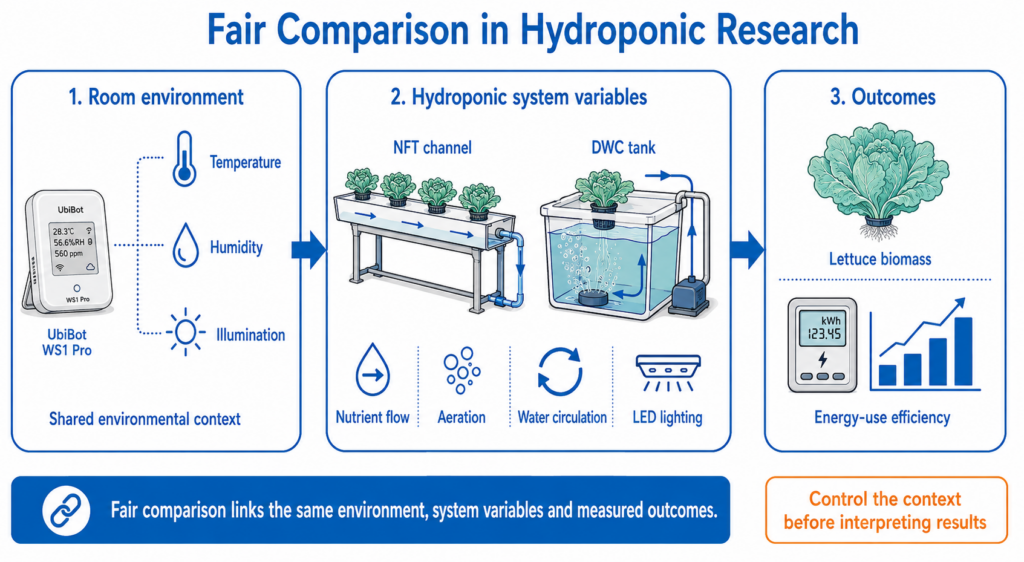
    The findings suggest that system selection can affect not only crop growth but also energy-use efficiency. Even when two systems grow the same crop under similar environmental conditions, differences in nutrient delivery, water movement, aeration, and lighting requirements can lead to different biomass output per unit of energy consumed.

    For lettuce production, the tested NFT system produced more fresh biomass while consuming slightly less total measured energy than the DWC system. This makes NFT a promising option for growers seeking better energy efficiency in indoor plant factories or aquaponic facilities.

    The study also shows why environmental monitoring matters. When comparing hydroponic systems, it is not enough to measure yield and electricity use alone. Temperature, humidity, and illumination must also be recorded to ensure that the comparison is fair. UbiBot WS1 Pro supported this by recording the room-level environmental conditions throughout the experimental period.

    For commercial growers, the study highlights the need to evaluate energy-use efficiency as a combined outcome of plant growth, lighting demand, pump operation, and environmental control.

    Application Value of UbiBot Devices

    The value of UbiBot WS1 Pro in this study lies in its role as an environmental monitoring tool for controlled-environment agriculture.

    First, it provided room-level environmental records. By monitoring temperature, relative humidity, and illumination, the device helped document the growing environment in which the NFT and DWC systems were tested.

    Second, it supported experimental comparability. Since the purpose of the research was to compare two hydroponic systems, the researchers needed evidence that both systems were grown under similar environmental conditions. The UbiBot data helped provide this environmental context.

    Third, it contributed to full-cycle monitoring. The paper states that obtained data were logged for the entire period from seeding to harvesting. This is important in crop studies because environmental conditions can influence growth outcomes at different stages.

    Fourth, UbiBot’s role complemented other measurement systems. The study also used EC and pH pens, smart energy meters, an electronic scale, and a spectroradiometer. UbiBot supplied the environmental layer of the dataset, while other tools measured nutrient conditions, energy use, light distribution, and plant growth.

    Fifth, it demonstrated how IoT-style environmental monitoring can support aquaponics and plant factory research. In indoor agriculture, small environmental changes can influence growth and energy-use results. Continuous monitoring helps researchers and growers interpret performance data more accurately.

    Overall, UbiBot WS1 Pro was valuable because it helped link crop growth and energy-use analysis to documented environmental conditions.

    Extended Application Scenarios

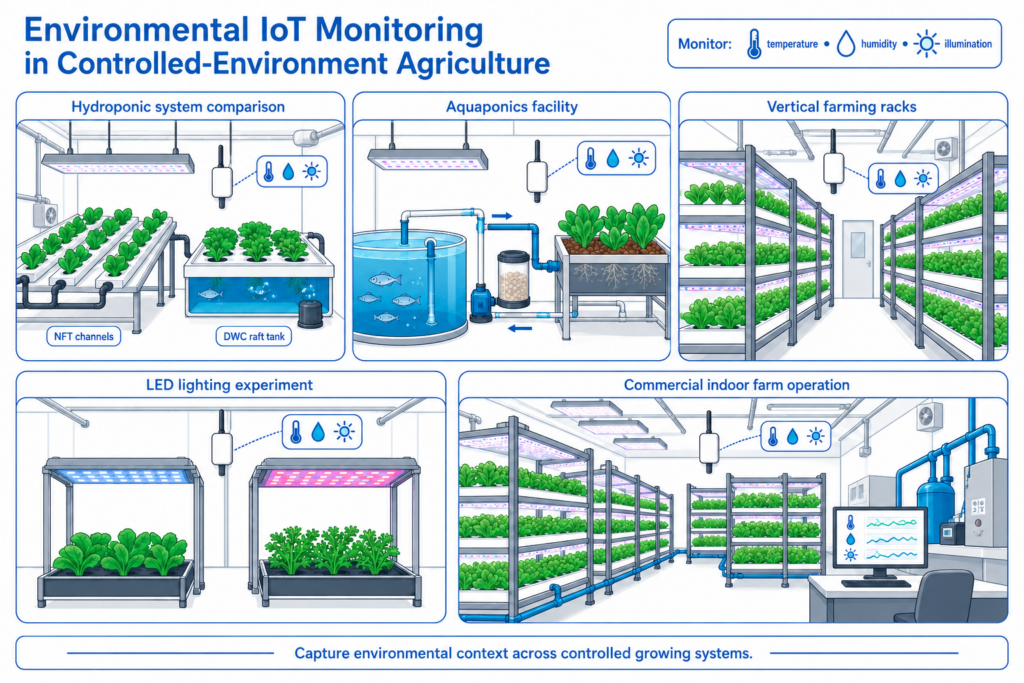
    The monitoring approach used in this study can be extended to several scenarios:

    1. Hydroponic system comparison
      Used to compare NFT, DWC, aeroponic, and other soilless cultivation systems under controlled environmental conditions.
    2. Aquaponics facility monitoring
      Used to record room temperature, humidity, and illumination in fish-plant integrated production systems.
    3. Vertical farming research
      Used to support environmental monitoring in stacked or indoor plant production systems.
    4. LED lighting experiments
      Used to track environmental changes during studies of photoperiod, PPFD, and light spectrum.
    5. Crop growth optimization
      Used to connect temperature, humidity, and illumination data with plant biomass, leaf area, root growth, and yield.
    6. Energy-use efficiency studies
      Used to provide environmental context when calculating crop output per unit of electricity.
    7. Commercial greenhouse and indoor farm operation
      Used to monitor production environments and identify deviations from target growing conditions.
    8. Educational and research learning factories
      Used in university or training facilities to teach data-driven controlled-environment agriculture.
    FAQ

    1. Which UbiBot product was used in the study?

    The study used the UbiBot WS1 Pro smart sensor.

    2. What data did UbiBot collect?

    UbiBot WS1 Pro monitored room temperature, relative humidity, and illumination.

    3. Where was UbiBot deployed?

    It was deployed inside AllFactory, an indoor aquaponics facility at the University of Alberta, Canada, where NFT and DWC hydroponic systems were tested.

    4. What was the sampling frequency?

    The paper states that the UbiBot sensor monitored conditions at constant intervals, but it does not specify the exact interval length.

    5. How long did the monitoring last?

    The environmental data were logged for the entire period from seeding to harvesting. The crop cycle included 21 days in growth chambers and 5 weeks in the NFT and DWC systems.

    6. How were the UbiBot data used?

    The data were used to record the environmental conditions of the experiment and support the comparability of the NFT and DWC hydroponic systems.

    7. Did UbiBot prove that NFT is better than DWC?

    No. UbiBot collected environmental data. The researchers used environmental records, plant growth measurements, and energy consumption data together to compare the energy-use efficiency of NFT and DWC systems.

    8. What were the main environmental conditions during the experiment?

    Both systems were maintained at 70.2% relative humidity and 18.8 °C ambient temperature. PPFD was approximately 258.33 µmol·m⁻²·s⁻¹ for NFT and 269.10 µmol·m⁻²·s⁻¹ for DWC.

    9. What was the main result of the study?

    The NFT system achieved an energy-use efficiency of 31.34 g·kWh⁻¹, compared with 24.53 g·kWh⁻¹ for the DWC system.

    10. Why is this research useful for indoor farming?

    It shows that hydroponic system choice can affect crop biomass and energy-use efficiency, and that environmental monitoring is important for fair comparison and data interpretation.


    Related Resources

    National University of Singapore Study Uses UbiBot WS1 Pro for Surface Temperature Calibration in District-Scale Thermal Infrared Monitoring
    Polish Academy of Sciences Study Uses UbiBot WS1 Pro to Monitor Temperature and Humidity During PM Filter Conditioning
    UbiBot vs HOBO vs SensorPush vs Testo: Which Museum Room Monitor Fits Your Collection?
    Polish Academy of Sciences Study Uses UbiBot WS1 Pro to Monitor Temperature and Humidity During Particulate Matter Filter Conditioning
    Empa-Led Study Uses UbiBot WS1 Pro for Temperature and Humidity Monitoring in Passive Cooling Blanket Trials Across Kenya, Uganda, and Nigeria
    Agroscope and Makerere University Study Uses UbiBot WS1 Pro for Temperature and Humidity Monitoring in Passive Tomato Cooling
    Laboratory Temperature & Humidity Monitor
    Hot Spa & Ubibot in Cold Winter
    menu-header-svg
    Search
    • Explore Knowledge
      • Comparison & Selection
      • Industry Solution
      • Product & Device
      • Criterion & Compliance
      • Deployment & Usage
      • Technology & Principle
    • Academic Research
    • In-depth Tech

    Academic Research

    See More >>

    University of Alberta Study Uses UbiBot WS1 Pro to Monitor Environmental Conditions in Hydroponic Lettuce Production

    Research Overview

    Item Content
    Paper Title Comparison of Energy-use Efficiency for Lettuce Plantation under Nutrient Film Technique and Deep-Water Culture Hydroponic Systems
    Publisher Elsevier
    Journey Procedia Computer Science
    Publish Time 2023; available online in Procedia Computer Science 217, 11–19
    Authors / Institutions Syed Abreez Gillani, Rabiya Abbasi, and Rafiq Ahmad from Aquaponics 4.0 Learning Factory, Department of Mechanical Engineering, University of Alberta, Canada; Pablo Martinez from Northumbria University, United Kingdom
    UbiBot Product UbiBot WS1 Pro smart sensor
    Data Collected Room temperature, relative humidity, and illumination
    Sampling Frequency The paper states that data were monitored at constant intervals, but does not specify the exact interval length
    Research Period Full lettuce growth period from seeding to harvesting; 21 days in growth chambers followed by 5 weeks in NFT and DWC hydroponic systems
    Application Scenario Hydroponic lettuce cultivation, aquaponics facility monitoring, controlled-environment agriculture, energy-use efficiency comparison between NFT and DWC systems
    Original Link https://doi.org/10.1016/j.procs.2022.12.197

    Research Background: What Problem Did This Study Address?

    Closed plant production systems, hydroponic farms, and aquaponics facilities are increasingly used to grow crops in controlled environments. These systems can reduce dependence on soil, improve water-use efficiency, and make year-round food production possible in places where outdoor farming is limited by climate, land availability, or water resources.

    However, indoor plant production also brings a major challenge: energy consumption. Artificial lighting, pumps, water circulation, aeration, heating, ventilation, and air-conditioning can all increase the operating cost and environmental footprint of hydroponic production. For this reason, researchers need to understand not only how much crop biomass a system produces, but also how much energy is consumed to produce that biomass.

    This study compared two common hydroponic systems: nutrient film technique, known as NFT, and deep-water culture, known as DWC. Both systems can be used to grow lettuce, but they differ in how water and nutrients are delivered to plant roots. NFT circulates a thin layer of nutrient solution through grow channels, while DWC suspends plants over nutrient-rich water and relies on aeration to maintain oxygen levels.

    The research question was whether NFT or DWC offers better energy-use efficiency for growing Little Gem lettuce in an indoor aquaponics facility. To make the comparison meaningful, the researchers needed to maintain and record comparable environmental conditions. In this context, UbiBot WS1 Pro was used to monitor real indoor environmental data during the crop growth period.

    The Specific Role of  UbiBot WS1 Pro Hydroponic Lettuce Monitoring

    In this study, UbiBot WS1 Pro was used as an environmental monitoring device inside the indoor aquaponics facility at the University of Alberta. The paper does not present UbiBot as the device that proved which hydroponic system is better. Instead, UbiBot was used to collect environmental condition data that helped ensure the NFT and DWC systems were compared under controlled and comparable conditions.

    The experiment was carried out in AllFactory, an aquaponics facility at the University of Alberta, Canada. Both NFT and DWC systems were placed indoors in the same facility. The facility’s heating, cooling, and air-conditioning were provided by building services and controlled by a thermostat. Under these conditions, the UbiBot WS1 Pro smart sensor was used to monitor room temperature, relative humidity, and illumination at constant intervals.

    These environmental data were important because the study compared energy-use efficiency between two hydroponic systems. If temperature, humidity, and light conditions were not recorded or controlled, differences in lettuce growth could be wrongly attributed to the hydroponic system type, when they might actually result from environmental variation. By recording these parameters throughout the experiment, the researchers could show that both systems were grown under similar environmental conditions.

    The recorded daily average values showed that both NFT and DWC systems were maintained at 70.2% relative humidity and 18.8 °C ambient temperature. The PPFD was also measured and optimized so that both systems received similar light conditions: approximately 258.33 µmol·m⁻²·s⁻¹ for the NFT system and 269.10 µmol·m⁻²·s⁻¹ for the DWC system.

    UbiBot data were therefore used for environmental recording and experimental condition control. The temperature, humidity, and illumination records helped support the comparability of the NFT and DWC growth environments, allowing the researchers to focus the analysis on plant growth, energy consumption, and energy-use efficiency.

    Research Methods and Data Collection Approach

    The experiment used Little Gem lettuce, also known as Lactuca Sativa L., as the test crop. The researchers selected this lettuce variety because its compact head size makes it suitable for small-scale vertical farming and controlled-environment production.

    Fifty seeds were first placed in growth chambers at 18 °C and 70% relative humidity. During the germination stage, the seeds were irradiated with LED lighting using a 12-hour photoperiod. After 21 days, 40 healthy seedlings were transplanted into rockwool cubes.

    The 40 seedlings were divided equally between two hydroponic systems. Twenty seedlings were placed in the NFT system, and twenty seedlings were placed in the DWC system. Both systems used the same nutrient solution. The NFT system was connected to a sump containing 20 gallons of nutrient-rich water and used a submersible pump to circulate the solution. The DWC system also used 20 gallons of nutrient solution and used air bubblers connected to air pumps to maintain dissolved oxygen.

    Both systems were illuminated by LED lights with a maximum photosynthetic photon flux of 200 µmol·s⁻¹. Because the two systems had different dimensions, the researchers optimized light intensity to provide similar photosynthetic photon flux density to both systems. The plants then grew under a 16-hour photoperiod for 5 weeks.

    During the experiment, UbiBot WS1 Pro monitored room temperature, relative humidity, and illumination. Electroconductivity and pH were also recorded using separate Bluelab instruments and balanced for both systems. Energy consumption from LED lights and pumps was measured using smart energy meters, with the data transmitted to a cloud platform.

    After the 5-week cultivation period, the researchers harvested the lettuce and measured plant fresh weight, shoot weight, root weight, plant height, plant width, root length, and leaf count. Energy-use efficiency was calculated by dividing plant fresh weight by total energy consumption in kilowatt-hours.

    Key Research Findings

    The study found that the NFT system achieved higher energy-use efficiency than the DWC system when growing Little Gem lettuce under the tested indoor conditions.

    Both systems were grown in the same indoor facility under similar environmental conditions. The UbiBot-monitored room conditions were maintained at 70.2% relative humidity and 18.8 °C ambient temperature for both systems. The pH values were also maintained at 5.9, while electroconductivity was similar between systems.

    Energy consumption differed between the systems. The DWC system consumed more energy for artificial illumination, which the researchers attributed to the higher light intensity required to ensure comparable PPFD between the two systems. The NFT system required more energy for water circulation because it used a pump to move nutrient solution through the grow channels. In total, the DWC system consumed 3.25% more energy than the NFT system.

    Growth measurements showed that NFT-grown lettuce had higher biomass. The mean fresh weight of NFT lettuce was 61.7 g, while the mean fresh weight of DWC lettuce was 49.9 g. This means NFT-grown lettuce had a 23.6% higher mean fresh weight. NFT also produced higher shoot and root weights, while plant height, plant width, and leaf count were similar between the two systems.

    The calculated energy-use efficiency was 31.34 g·kWh⁻¹ for NFT and 24.53 g·kWh⁻¹ for DWC. This means the NFT system achieved 27.7% higher energy-use efficiency under the tested conditions.

    The paper attributes this result to two main factors: improved lettuce growth in the NFT system, likely related to nutrient flow and plant density, and slightly lower total energy consumption compared with the DWC setup.

    What This Means for Hydroponic and Aquaponic Production

    This study provides practical insight for controlled-environment agriculture, especially indoor hydroponic and aquaponic facilities where energy cost is a major concern.

    The findings suggest that system selection can affect not only crop growth but also energy-use efficiency. Even when two systems grow the same crop under similar environmental conditions, differences in nutrient delivery, water movement, aeration, and lighting requirements can lead to different biomass output per unit of energy consumed.

    For lettuce production, the tested NFT system produced more fresh biomass while consuming slightly less total measured energy than the DWC system. This makes NFT a promising option for growers seeking better energy efficiency in indoor plant factories or aquaponic facilities.

    The study also shows why environmental monitoring matters. When comparing hydroponic systems, it is not enough to measure yield and electricity use alone. Temperature, humidity, and illumination must also be recorded to ensure that the comparison is fair. UbiBot WS1 Pro supported this by recording the room-level environmental conditions throughout the experimental period.

    For commercial growers, the study highlights the need to evaluate energy-use efficiency as a combined outcome of plant growth, lighting demand, pump operation, and environmental control.

    Application Value of UbiBot Devices

    The value of UbiBot WS1 Pro in this study lies in its role as an environmental monitoring tool for controlled-environment agriculture.

    First, it provided room-level environmental records. By monitoring temperature, relative humidity, and illumination, the device helped document the growing environment in which the NFT and DWC systems were tested.

    Second, it supported experimental comparability. Since the purpose of the research was to compare two hydroponic systems, the researchers needed evidence that both systems were grown under similar environmental conditions. The UbiBot data helped provide this environmental context.

    Third, it contributed to full-cycle monitoring. The paper states that obtained data were logged for the entire period from seeding to harvesting. This is important in crop studies because environmental conditions can influence growth outcomes at different stages.

    Fourth, UbiBot’s role complemented other measurement systems. The study also used EC and pH pens, smart energy meters, an electronic scale, and a spectroradiometer. UbiBot supplied the environmental layer of the dataset, while other tools measured nutrient conditions, energy use, light distribution, and plant growth.

    Fifth, it demonstrated how IoT-style environmental monitoring can support aquaponics and plant factory research. In indoor agriculture, small environmental changes can influence growth and energy-use results. Continuous monitoring helps researchers and growers interpret performance data more accurately.

    Overall, UbiBot WS1 Pro was valuable because it helped link crop growth and energy-use analysis to documented environmental conditions.

    Extended Application Scenarios

    The monitoring approach used in this study can be extended to several scenarios:

    1. Hydroponic system comparison
      Used to compare NFT, DWC, aeroponic, and other soilless cultivation systems under controlled environmental conditions.
    2. Aquaponics facility monitoring
      Used to record room temperature, humidity, and illumination in fish-plant integrated production systems.
    3. Vertical farming research
      Used to support environmental monitoring in stacked or indoor plant production systems.
    4. LED lighting experiments
      Used to track environmental changes during studies of photoperiod, PPFD, and light spectrum.
    5. Crop growth optimization
      Used to connect temperature, humidity, and illumination data with plant biomass, leaf area, root growth, and yield.
    6. Energy-use efficiency studies
      Used to provide environmental context when calculating crop output per unit of electricity.
    7. Commercial greenhouse and indoor farm operation
      Used to monitor production environments and identify deviations from target growing conditions.
    8. Educational and research learning factories
      Used in university or training facilities to teach data-driven controlled-environment agriculture.

    FAQ

    1. Which UbiBot product was used in the study?

    The study used the UbiBot WS1 Pro smart sensor.

    2. What data did UbiBot collect?

    UbiBot WS1 Pro monitored room temperature, relative humidity, and illumination.

    3. Where was UbiBot deployed?

    It was deployed inside AllFactory, an indoor aquaponics facility at the University of Alberta, Canada, where NFT and DWC hydroponic systems were tested.

    4. What was the sampling frequency?

    The paper states that the UbiBot sensor monitored conditions at constant intervals, but it does not specify the exact interval length.

    5. How long did the monitoring last?

    The environmental data were logged for the entire period from seeding to harvesting. The crop cycle included 21 days in growth chambers and 5 weeks in the NFT and DWC systems.

    6. How were the UbiBot data used?

    The data were used to record the environmental conditions of the experiment and support the comparability of the NFT and DWC hydroponic systems.

    7. Did UbiBot prove that NFT is better than DWC?

    No. UbiBot collected environmental data. The researchers used environmental records, plant growth measurements, and energy consumption data together to compare the energy-use efficiency of NFT and DWC systems.

    8. What were the main environmental conditions during the experiment?

    Both systems were maintained at 70.2% relative humidity and 18.8 °C ambient temperature. PPFD was approximately 258.33 µmol·m⁻²·s⁻¹ for NFT and 269.10 µmol·m⁻²·s⁻¹ for DWC.

    9. What was the main result of the study?

    The NFT system achieved an energy-use efficiency of 31.34 g·kWh⁻¹, compared with 24.53 g·kWh⁻¹ for the DWC system.

    10. Why is this research useful for indoor farming?

    It shows that hydroponic system choice can affect crop biomass and energy-use efficiency, and that environmental monitoring is important for fair comparison and data interpretation.

    分享

    LinkedIn2

    Facebook2

    X

    Newsletter Signup

    Related Resources

    National University of Singapore Study Uses UbiBot WS1 Pro for Surface Temperature Calibration in District-Scale Thermal Infrared Monitoring
    Polish Academy of Sciences Study Uses UbiBot WS1 Pro to Monitor Temperature and Humidity During PM Filter Conditioning
    UbiBot vs HOBO vs SensorPush vs Testo: Which Museum Room Monitor Fits Your Collection?
    Polish Academy of Sciences Study Uses UbiBot WS1 Pro to Monitor Temperature and Humidity During Particulate Matter Filter Conditioning
    Empa-Led Study Uses UbiBot WS1 Pro for Temperature and Humidity Monitoring in Passive Cooling Blanket Trials Across Kenya, Uganda, and Nigeria
    Agroscope and Makerere University Study Uses UbiBot WS1 Pro for Temperature and Humidity Monitoring in Passive Tomato Cooling
    Laboratory Temperature & Humidity Monitor
    Hot Spa & Ubibot in Cold Winter
    menu-header-svg
    Search
    • Explore Knowledge
      • Comparison & Selection
      • Industry Solution
      • Product & Device
      • Criterion & Compliance
      • Deployment & Usage
      • Technology & Principle
    • Academic Research
    • In-depth Tech
    Enter Your Information

    Confirm

    Products

    Dashboards

    Support

    Purchase

    Company

    Smart Sensing

    UbiBot Web Console

    APP Download

    UbiBot Online Store

    News

    Smart Control

    UbiBot Space

    Product Docs & APIs

    Find Distributors

    About Us

    Smart Video

    UbiBot On-Premises

    Helpdesk & FAQ

    Volume Pricing

    Contact Us

    LoRa Products

    Agency Web Console

    Video Center

    Architecture

    Software & Platform


    Pricing


    System Status

    External Sensors


    Become a Distributor

    Accessories


    Become an Affiliate

    Global SIM


    Positioning System


    Products

    Dashboards

    Business Partners

    WS1

    UbiBot Web Console

    Volume Pricing

    WS1 Pro

    UbiBot Space

    Become a Distributor

    GS1

    UbiBot Support Desk

    Affiliates

    GS2

    Agency Web Console


    MS1


    SP1


    Accessories


    Docs

    Purchase

    Company

    Platform API

    Pricing

    News

    Q&A

    UbiBot Partners

    About us

    Privacy Policy

    Online Store

    Contact

    Terms of Service


    System Status

    Products

    Dashboards

    Smart Sensing

    UbiBot Web Console

    Smart Control

    UbiBot Space

    Smart Video

    UbiBot On-Premises

    LoRa Products

    Agency Web Console

    Software & Platform


    External Sensors


    Accessories


    Global SIM


    Positioning System


    Support

    Purchase

    APP Download

    UbiBot Online Store

    Product Docs & APIs

    Find Distributors

    Helpdesk & FAQ

    Volume Pricing

    Video Center


    Pricing


    Company

    News

    About Us

    Contact Us

    Architecture

    System Status

    Become a Distributor

    Become an Affiliate

    Language:
    English 日本語 (ベータ)  
    Language:

    English

    日本語 (ベータ)


    IoT Product Family:
    ubibotico     Wireless environmental sensing products and smart building solutions
    ubitrackico     UWB-based real-time indoor tracking solutions with 30cm accuracy

    IoT Product Family:

    ubibotico  Wireless environmental sensing products and smart building solutions
    ubitrackico  UWB-based real-time indoor tracking solutions with 30cm accuracy

    © 2013-2026 UbiBot.com. All rights reserved.

    Terms of Service | Privacy Policy | Compliance

    youtube facebook twitter