

.svg)
Shanghai Jiao Tong University and National University of Singapore Study Use UbiBot GS1-AETH1RS for Vertical Farming Environment Monitoring
Published: August 10, 2026
Update: August 28, 2026
By Allen Lee
Research Overview
| Paper Title | Toward Sustainable Agriculture: The Design of Environmentally Friendly, Economical, and Modular Vertical Farming Systems |
| Publisher | Elsevier Ltd. on behalf of Chinese Academy of Engineering and Higher Education Press Limited Company |
| Journey | Engineering |
| Publish Time | Available online October 17, 2025; Engineering 55, 2025, pages 229–240 |
| Authors / Institutions | Junye Wu, Shanghai Jiao Tong University; Energy and Environmental Sustainability Solutions for Megacities, CREATE, Singapore; National University of Singapore. Yoke Wang Cheng, NUS Environmental Research Institute. Guiying Lin, Dequan Xu, Yiying Wang, National University of Singapore / CREATE. Clive Chong, Paradise Eco Tourism Pte. Ltd. Yanjun Dai, Shanghai Jiao Tong University. Chi-Hwa Wang, National University of Singapore. Tianshu Ge, Shanghai Jiao Tong University / CREATE |
| UbiBot Product | UbiBot GS1-AETH1RS industrial-grade cloud-based Wi-Fi four-in-one logger |
| Data Collected | CO₂ concentration, light intensity, temperature, and humidity in each cultivation chamber |
| Sampling Frequency | The paper states that environmental conditions and CO₂ concentration were monitored continuously, but does not explicitly specify the raw logging interval |
| Research Period | Cultivation experiment conducted in Singapore from April to May 2023; pak choi and kale were cultivated for 47 days |
| Application Scenario | Vertical farming environment monitoring, CO₂ enrichment control, artificial lighting evaluation, biochar-amended soil cultivation, modular sustainable agriculture system design |
| Original Link | https://doi.org/10.1016/j.eng.2025.07.043 |
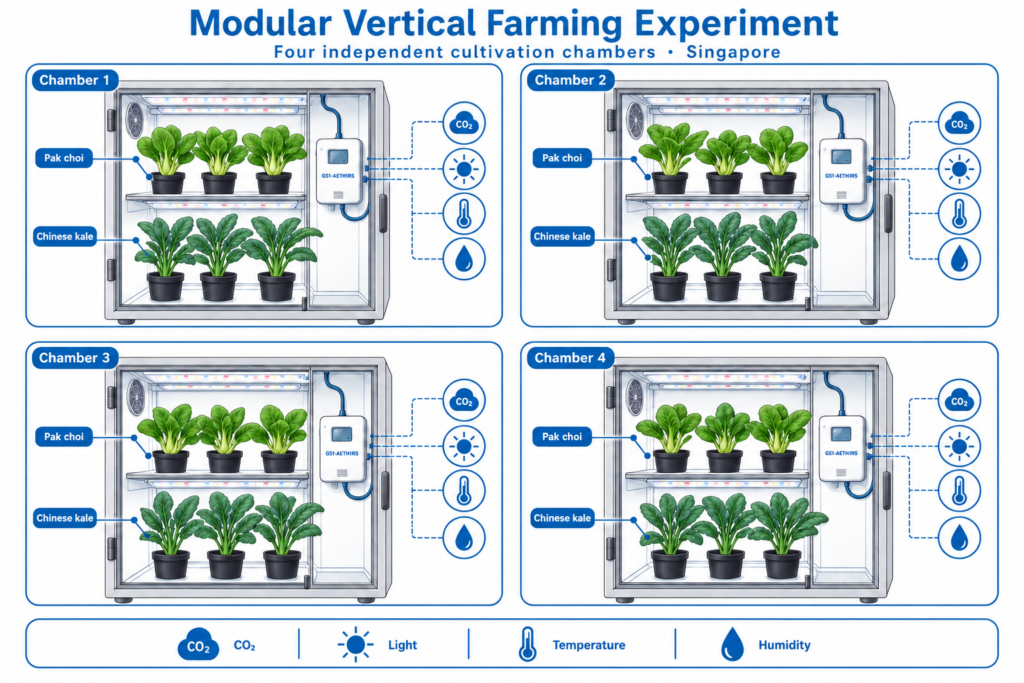
Shanghai Jiao Tong University and National University of Singapore Study Use UbiBot GS1-AETH1RS for Vertical Farming Environment Monitoring
Research Background: What Problem Did This Study Address?
Urban population growth, climate change, shrinking cropland, and increasing food demand are placing pressure on traditional agricultural systems. Vertical farming is considered a promising alternative because it can grow crops in stacked layers under controlled conditions, reduce land use, support year-round production, and bring food production closer to cities.
However, vertical farming still faces two major challenges. First, crop productivity depends on many interacting variables, including CO₂ concentration, light source, temperature, humidity, plant species, irrigation, fertilizer, and growing medium. Studying these factors separately is not enough for practical system design. Second, vertical farms can consume large amounts of energy, especially for lighting, ventilation, air conditioning, and CO₂ enrichment. This can make them expensive and increase their environmental footprint if the system is not carefully designed.
This study proposed an environmentally friendly, economical, and modular vertical farming system. The design combined cultivation chambers, LED lighting, biochar-amended soil, direct air capture for CO₂ enrichment, photovoltaic-thermal energy supply, and HVAC control. The researchers carried out real cultivation experiments with pak choi and kale in Singapore, then used the experimental data to support techno-economic analysis and life-cycle assessment.
UbiBot GS1-AETH1RS loggers were used to record the real environmental conditions inside the cultivation chambers. These data helped the researchers evaluate how CO₂ enrichment, light environment, and chamber conditions related to vegetable growth and system performance.
The Specific Role of UbiBot GS1-AETH1RS Vertical Farming Monitoring
In this study, UbiBot GS1-AETH1RS devices were used as environmental monitoring instruments inside the vertical farming experiment. The paper does not claim that UbiBot proved the effectiveness of vertical farming. Instead, UbiBot provided real chamber-level environmental data that supported the analysis of crop growth, CO₂ enrichment, artificial lighting, and system design.
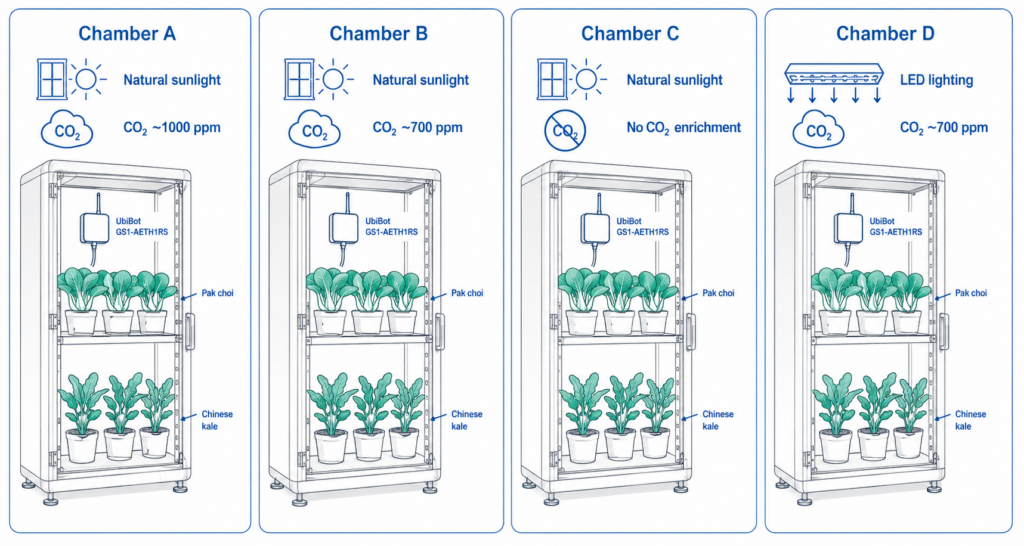
Four cultivation chambers compared different CO₂ and lighting conditions, with UbiBot devices recording chamber-level environmental data.
The cultivation experiment was conducted in a farm area on the outskirts of Singapore. Four independent cultivation chambers, labelled A, B, C, and D, were established to compare different growing conditions. Chambers A, B, and C were wrapped with transparent polyethylene films and cultivated under natural sunlight. Chamber D was wrapped with block-out cloth and used LED lighting. Each chamber contained 72 pots of vegetables, including pak choi and kale grown in soil with different biochar application ratios.
UbiBot GS1-AETH1RS industrial-grade cloud-based Wi-Fi four-in-one loggers were installed in each cultivation chamber. These devices monitored four key environmental parameters: CO₂ concentration, light intensity, temperature, and humidity. According to the paper, the device had a temperature detection accuracy of ±0.3 °C and humidity detection accuracy of ±3%.
The UbiBot data were used in several specific ways.
First, the loggers recorded the environmental conditions inside each chamber during the cultivation period. This was important because the experimental treatments differed by CO₂ concentration and light environment. Chamber A was maintained at approximately 1000 ppm CO₂, Chamber B at approximately 700 ppm CO₂, Chamber C served as the control without CO₂ enrichment, and Chamber D used LED light with approximately 700 ppm CO₂.
Second, UbiBot continuously monitored CO₂ concentration in the chambers during CO₂ enrichment. When the researchers tested their direct air capture rotary adsorber, the UbiBot sensor inside the cultivation chamber recorded how CO₂ concentration changed after the adsorber was connected. These records showed whether captured CO₂ was effectively delivered into the chamber.
Third, the UbiBot environmental data helped interpret crop growth outcomes. Since pak choi and kale were grown under different combinations of natural sunlight, LED lighting, CO₂ levels, and biochar ratios, recorded chamber conditions were necessary for connecting plant biomass results with the actual growing environment.
Fourth, the monitoring data supported scale-up system design. The experimental chamber data gave the researchers practical inputs for evaluating modular vertical farming systems, including CO₂ enrichment, lighting strategy, cultivation layout, and performance assumptions for techno-economic and environmental analysis.
Therefore, UbiBot’s role was environmental recording and experimental condition monitoring. It supplied the chamber-level data layer that helped the research team compare cultivation strategies and assess whether a modular vertical farming system could improve crop yield while managing economic and environmental impacts.
Research Methods and Data Collection Approach
The study combined crop cultivation experiments, CO₂-enrichment testing, system design, techno-economic analysis, and life-cycle assessment.
For the cultivation experiment, the researchers selected two leafy vegetables commonly consumed in Singapore: pak choi and Chinese kale. The crops were grown in soil-based pots. Biochar was mixed into the soil at four weight percentages: 0%, 3%, 6%, and 9%. Nine replicates were prepared for each vegetable and each biochar ratio.
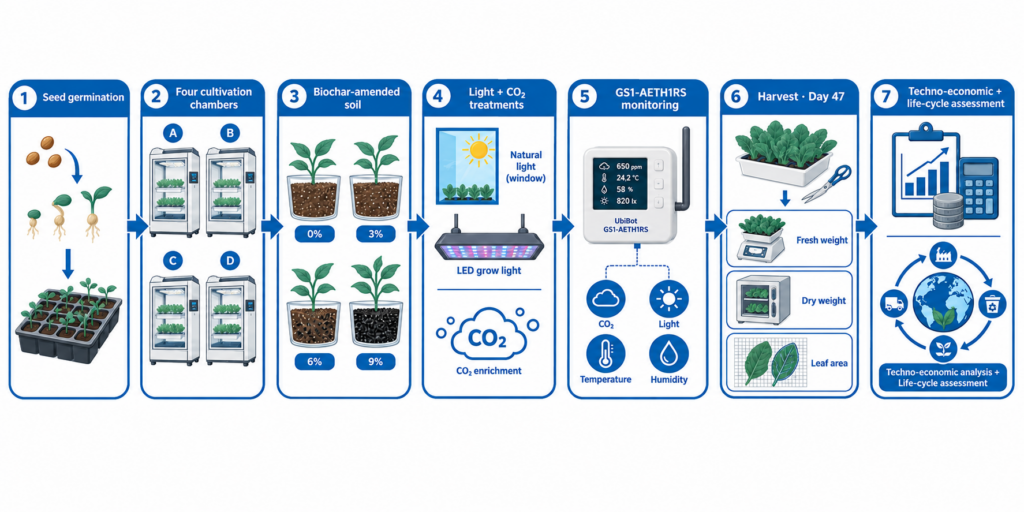
Research workflow from crop cultivation and CO₂ enrichment testing to techno-economic and life-cycle assessment.
Four cultivation chambers were used. Chamber A was enriched to approximately 1000 ppm CO₂ under natural sunlight. Chamber B was enriched to approximately 700 ppm CO₂ under natural sunlight. Chamber C was the control chamber under natural sunlight without CO₂ enrichment, with CO₂ near ambient levels. Chamber D used LED lighting with a red-to-blue ratio of 4:1, a photoperiod of 16 hours per day, and CO₂ concentration around 700 ppm.
UbiBot GS1-AETH1RS loggers monitored CO₂ concentration, light intensity, temperature, and humidity in each chamber. The spectral distribution of light was measured separately using a portable agricultural spectrometer.
Seeds were germinated directly in pots for four days without light. From Day 5 onward, crops were grown under the chamber-specific light and CO₂ conditions. The vegetables were watered daily, and fertilizer was applied on Days 9, 26, and 39. Pak choi and kale were harvested on Day 47. Leaf area, fresh weight, and dry weight were measured to evaluate crop growth.
The study also tested a direct air capture rotary adsorber for CO₂ enrichment. The device captured CO₂ from air and delivered it into the cultivation chamber. CO₂ concentration in the chamber was continuously monitored using the UbiBot sensor.
Finally, the experimental findings were used to design and evaluate scale-up vertical farming systems. The researchers compared four configurations: grid electricity without DAC, PV electricity without DAC, PV electricity with DAC and heat pump, and PVT energy with DAC. They assessed economic performance using net present value and payback period, and environmental performance using life-cycle assessment.
Key Research Findings
The cultivation experiment showed that CO₂ enrichment increased vegetable biomass. Compared with the control chamber without CO₂ enrichment, kale grown at 700 ppm and 1000 ppm CO₂ showed fresh weight increases of 30.9% and 57.5%, respectively. Pak choi showed fresh weight increases of 25.2% and 53.5%, respectively.
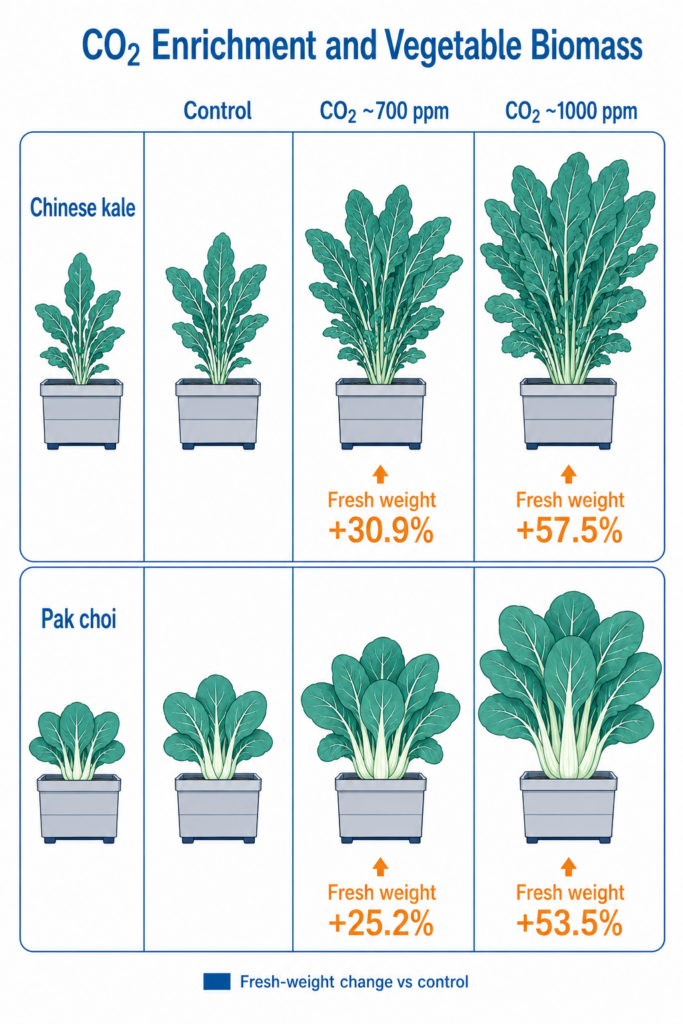
CO₂ enrichment increased pak choi and kale fresh weight under the tested vertical farming conditions.
The comparison between natural sunlight and LED lighting showed that LED cultivation was feasible. Pak choi in the LED chamber slightly exceeded the natural-light 700 ppm CO₂ chamber in fresh and dry weight, while kale showed the opposite trend. However, the differences were not statistically significant at the 0.05 confidence level.
Biochar affected leaf development. The leaf area of both pak choi and kale generally increased and then decreased as the biochar ratio rose. The largest leaf area occurred at a biochar ratio of 6 wt%, suggesting that moderate biochar application improved leaf growth under the tested conditions. However, changes in total vegetable weight across biochar ratios were not statistically significant.
The DAC rotary adsorber successfully enriched CO₂ in the chamber. When connected to the cultivation chamber, CO₂ concentration increased from around 700 ppm toward 1000 ppm and stabilized after approximately 90 minutes. During a one-day continuous test, the treated chamber showed an average CO₂ concentration increase of about 300 ppm compared with the chamber without CO₂ enrichment.
For the scale-up system, the configuration combining photovoltaic-thermal energy and DAC achieved the best overall performance. Compared with the conventional grid-powered design, this configuration increased net present value by 157%. It also achieved the lowest carbon footprint among the four configurations, with emissions of 0.468 kg CO₂-equivalent per kg of vegetable.
The sensitivity analysis showed that larger systems improved net present value and reduced carbon emissions per functional unit. Lettuce showed the best economic and environmental performance among the vegetable species compared, while tomatoes had good economic performance but higher carbon emissions. The global deployment analysis suggested that the system could perform well in multiple cities, especially where solar resources and vegetable prices are favorable.
What This Means for Vertical Farming Applications
This study shows that vertical farming performance depends on both biological cultivation conditions and system engineering. CO₂ enrichment, light strategy, growing medium, energy source, and modular system size all affect the outcome.
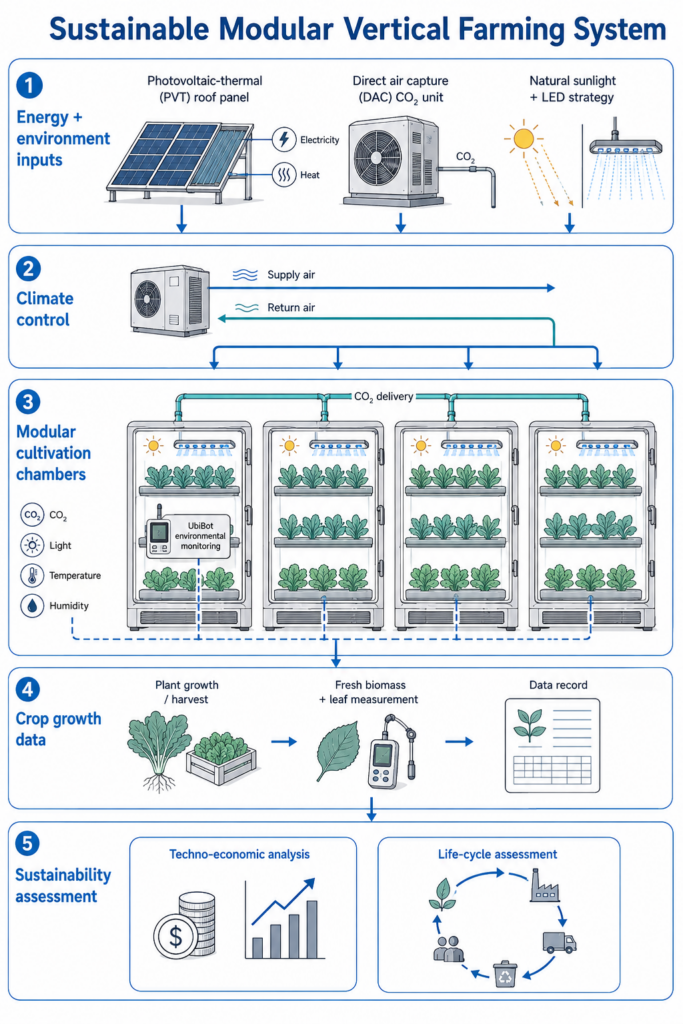
Sustainable vertical farming depends on cultivation conditions, CO₂ supply, energy source, modular design, and environmental monitoring.
For controlled-environment agriculture, chamber-level monitoring is essential. Without real-time or continuous records of CO₂ concentration, light intensity, temperature, and humidity, it would be difficult to interpret plant growth differences across chambers. UbiBot data helped provide this environmental context.
For commercial vertical farming, the results suggest that CO₂ enrichment can improve yield, but the method of supplying CO₂ matters. Using DAC powered by renewable thermal energy may reduce dependence on gas cylinders and improve environmental performance. Combining DAC with PVT energy can also improve economic outcomes.
For system design, the modular approach is important. Standardized cultivation modules can be scaled up like building blocks, reducing construction complexity and allowing farms to be adapted to different locations, crop types, and production scales.
For sustainability assessment, the study shows that vertical farming should not be evaluated only by yield. Energy source, carbon footprint, water consumption, land use, biochar carbon sequestration, packaging, transport, and crop price all influence whether the system is truly sustainable.
Application Value of UbiBot Devices
UbiBot GS1-AETH1RS demonstrated practical value as an environmental monitoring device in this vertical farming study.
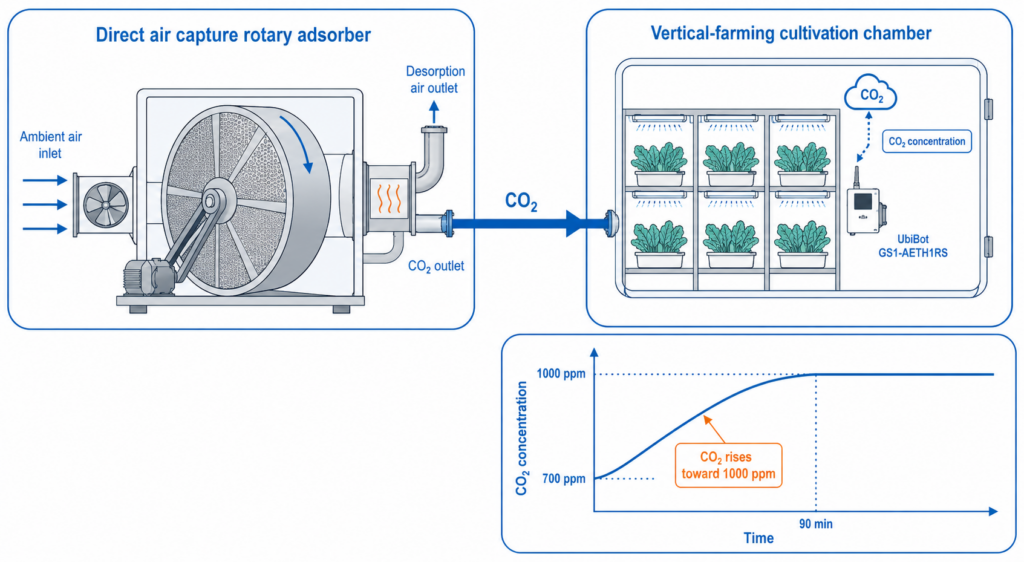
UbiBot monitoring helped verify CO₂ delivery from the direct air capture system into the cultivation chamber.
First, it provided chamber-level environmental records. By measuring CO₂ concentration, light intensity, temperature, and humidity in each chamber, UbiBot helped document the actual cultivation environment experienced by the crops.
Second, it supported experimental comparison. The four chambers had different CO₂ and lighting treatments, so environmental records were needed to confirm and interpret the differences between treatment groups.
Third, UbiBot supported CO₂ enrichment evaluation. The chamber sensor recorded how CO₂ concentration changed when the DAC rotary adsorber supplied captured CO₂, helping the researchers assess whether the CO₂-enrichment strategy worked inside the chamber.
Fourth, the device helped link environmental control with plant growth. Crop fresh weight, dry weight, and leaf area could be interpreted together with the monitored CO₂, light, temperature, and humidity conditions.
Fifth, the monitoring workflow provided practical data for system scale-up. Real chamber data supported the later techno-economic and life-cycle assessment assumptions used in the modular vertical farming design.
Overall, UbiBot’s value in this paper was not standalone crop optimization. Its value was providing reliable environmental data for controlled cultivation experiments, CO₂ enrichment analysis, and sustainable vertical farming system evaluation.
Extended Application Scenarios
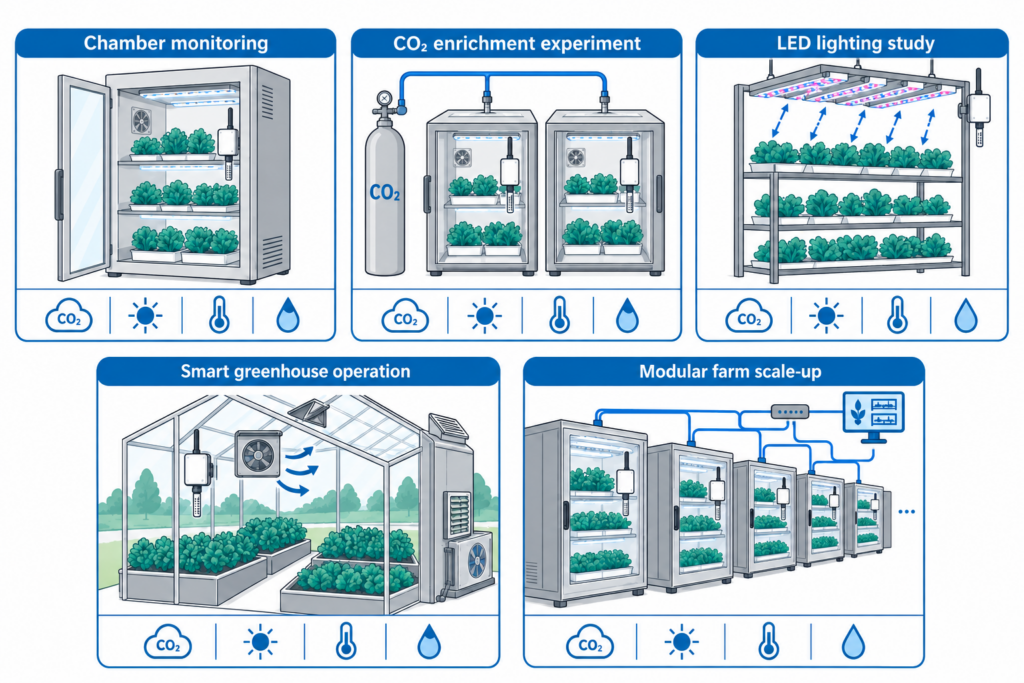
The same monitoring approach can support vertical farming chambers, CO₂ enrichment experiments, LED lighting studies, smart greenhouses, and modular farm scale-up.
The monitoring approach used in this study can be extended to several related scenarios:
- Vertical farming chamber monitoring
Used to record CO₂, light, temperature, and humidity in stacked indoor cultivation systems. - CO₂ enrichment experiments
Used to track chamber CO₂ concentration when gas cylinders, fermentation systems, or DAC systems are used. - LED plant lighting studies
Used to monitor light intensity and environmental conditions during artificial-light cultivation. - Biochar-amended soil cultivation
Used to provide environmental context when evaluating biochar effects on vegetable growth. - Controlled-environment agriculture research
Used to compare different crop species, cultivation recipes, and climate-control strategies. - Smart greenhouse operation
Used to monitor CO₂, temperature, humidity, and light in semi-controlled greenhouse environments. - Modular farm scale-up testing
Used to collect environmental data from pilot modules before commercial deployment. - Agricultural system life-cycle assessment
Used to provide measured environmental inputs for economic and carbon-footprint modeling.
FAQ
1. Which UbiBot product was used in the study?
The study used UbiBot GS1-AETH1RS industrial-grade cloud-based Wi-Fi four-in-one loggers.
2. What data did UbiBot collect?
UbiBot collected CO₂ concentration, light intensity, temperature, and humidity in each cultivation chamber.
3. Where were the UbiBot devices deployed?
They were installed inside the four independent vertical farming cultivation chambers used in the Singapore experiment.
4. What was the sampling frequency?
The paper states that the chamber environment and CO₂ concentration were monitored continuously, but it does not specify the raw logging interval.
5. How long did the cultivation experiment last?
The cultivation experiment lasted 47 days. It was conducted in Singapore from April to May 2023.
6. How were UbiBot data used?
The data were used to record chamber environmental conditions, monitor CO₂ enrichment, compare cultivation treatments, and support later system design and performance analysis.
7. Did UbiBot prove that vertical farming is sustainable?
No. UbiBot collected environmental data. The researchers combined those data with crop growth measurements, DAC testing, techno-economic analysis, and life-cycle assessment to evaluate the vertical farming design.
8. What crops were tested?
The study tested pak choi and Chinese kale.
9. What were the main cultivation factors studied?
The study examined CO₂ concentration, natural sunlight versus LED lighting, biochar application ratio, and plant species.
10. What was the main system-level result?
The configuration integrating photovoltaic-thermal energy and DAC achieved the best overall performance, with a 157% increase in net present value compared with the conventional design and a carbon footprint of 0.468 kg CO₂-equivalent per kg of vegetable.